
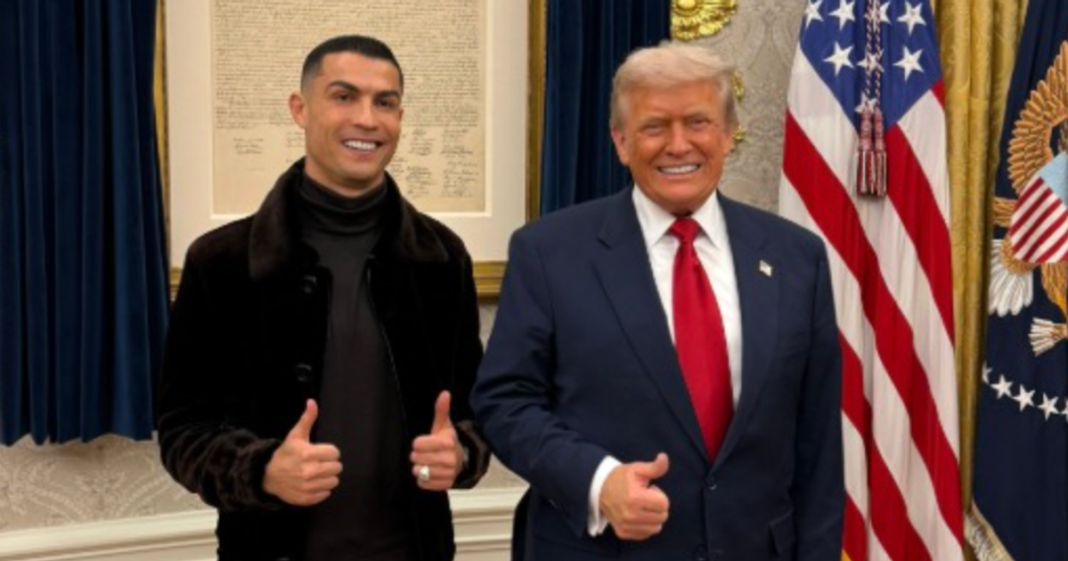

Cristiano Ronaldo’s recent visit to the White House has seemingly worked in his favor. Following a selfie session with FIFA president Gianni Infantino and President Donald Trump, Ronaldo faced a potential three-match ban after a red card incident during a game against the Republic of Ireland. However, in a surprising turn of events, FIFA decided to suspend the final two matches of the ban, allowing Ronaldo to be eligible for the upcoming World Cup from the start.
While some may view this leniency as controversial, Ronaldo’s on-field contributions for Portugal have been notable, with his recent suspension in the qualifiers against Armenia being the first time he faced such disciplinary action in over 200 national team appearances.
The decision by FIFA to grant this reprieve to Ronaldo has sparked debates about fairness and favoritism in the sport. Despite the scrutiny, Ronaldo’s availability for the World Cup opener next year signifies FIFA’s desire to showcase star players at the premier event, setting an intriguing precedent for future disciplinary rulings in football.
Furthermore, the timing of this decision coincides with FIFA’s focus on promoting the biggest names in the sport, aligning with their efforts to elevate the profile of the World Cup and draw global attention to the tournament. The implications of this ruling extend beyond Ronaldo’s individual case, shedding light on the complex interplay between player discipline, sporting integrity, and the commercial interests of football’s governing bodies.
In conclusion, Ronaldo’s exemption from part of his suspension raises questions about the consistency and transparency of FIFA’s disciplinary processes. As the football world awaits the upcoming World Cup, the spotlight will undoubtedly be on Ronaldo and how his presence shapes Portugal’s campaign on the international stage.