
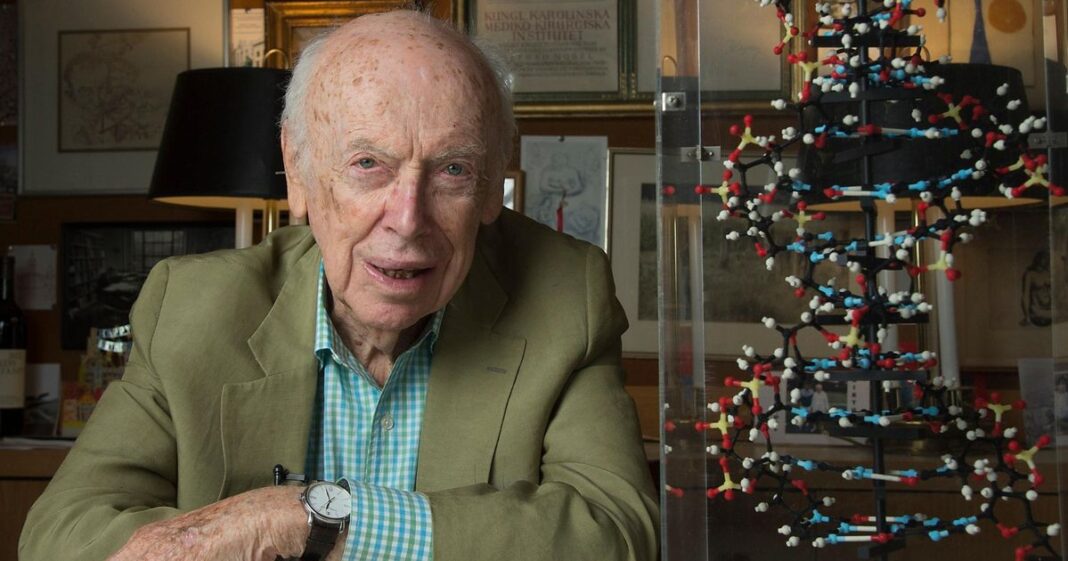

Renowned scientist James Watson, a co-recipient of the Nobel Prize for his pioneering work on DNA, has passed away at the age of 97. His collaboration in unraveling the double helix structure of DNA in 1953 sparked advancements in medicine, law enforcement, genealogy, and ethics. Cold Spring Harbor Laboratory, where Watson conducted research for many years, confirmed his death.
The groundbreaking DNA discovery, achieved when Watson was only 24, established him as a prominent figure in the scientific community for decades. Despite his early acclaim, in later years, Watson faced criticism and professional backlash for controversial statements, including remarks on race and intelligence.
Alongside Francis Crick and Maurice Wilkins, Watson was awarded the Nobel Prize in 1962 for elucidating DNA’s double helix nature, comprising two intertwined strands resembling a twisted ladder. This breakthrough illuminated the storage of hereditary information and the process of DNA replication during cell division, likened to a zipper separating the two DNA strands.
The double helix symbol became widely recognized beyond scientific circles, appearing in art and even on a British postage stamp. This discovery paved the way for advancements like genetic manipulation, gene therapy, forensic DNA analysis, and genealogical studies, while also prompting ethical debates on altering genetic codes and hereditary traits.
Watson’s contributions extended beyond his initial breakthrough, as he authored influential textbooks, a bestselling memoir, and played a key role in the Human Genome Project. Motivated by personal reasons, including his son’s health struggles, Watson championed genomic research to understand and potentially treat genetic disorders.
In 2007, Watson stirred controversy with racially insensitive comments, highlighting the complexities of his legacy. Despite his achievements, his remarks underscored the ongoing challenges of confronting bias and discrimination in the scientific community.