
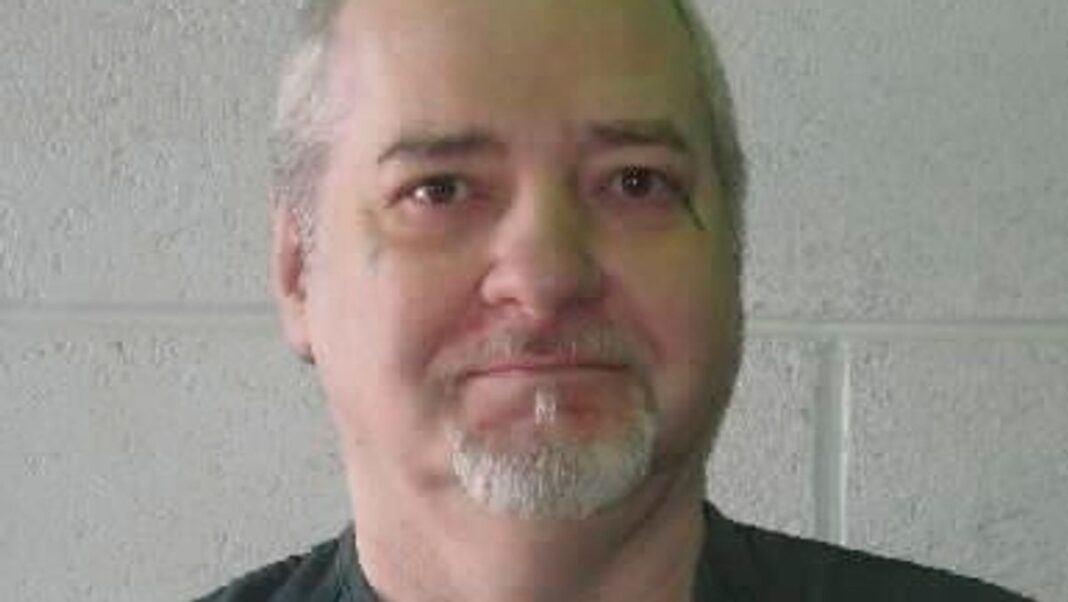

A death row inmate in Idaho, Thomas Creech, shared his harrowing ordeal of almost being executed but the procedure failing due to difficulties in inserting the necessary IV line. Creech, who has been behind bars for close to half a century for five murders across three states, was wheeled into the execution chamber in February. Medical staff struggled for nearly an hour to find a suitable vein in his arms, hands, and legs to administer the lethal drug, but all attempts were unsuccessful, leading to the cancellation of the execution.
Speaking to the New York Times in 2024, Creech recounted the excruciating experience of enduring multiple needle jabs, knowing that any successful insertion could mean his imminent death. The 73-year-old inmate described the intensity of the moment, particularly when they attempted to access veins in his ankles, fearing that his time had come.
On the eve of the botched execution, Creech enjoyed a final meal of chicken, mashed potatoes, and gravy from the prison kitchen, bidding farewell to his lawyers, wife, and stepson. Having spent decades on death row, Creech met his current wife, LeAnn Creech, who is the mother of a prison guard, and they tied the knot in 1998.
Before the failed execution, Creech prayed with a spiritual adviser and was secured to a board in his cell in the F Block of the death row unit, later being wheeled into the execution chamber at the Idaho Maximum Security Institution. Despite efforts to locate a viable vein in his arms, hands, and ankles over a 42-minute period, the execution had to be halted just before 11 am.
Idaho’s prison system director, Josh Tewalt, stated in a post-event news conference that the decision to stop the execution was the correct one, emphasizing the importance of dignity, professionalism, and respect in the process. Creech, a convicted serial killer, has given conflicting accounts of his crimes over the years, once claiming responsibility for dozens of deaths but later retracting those statements, attributing them to a sensationalist attorney.
Legally convicted of five murders, including the killing of a fellow inmate in 1981, Creech’s lawyers have sought to overturn his death sentence, arguing against a second execution attempt following the failed one. The debate centers on constitutional grounds, citing concerns of cruelty and double jeopardy.
Recent years have seen a rise in botched executions across several states, mainly due to difficulties in accessing veins for administering lethal injections. Factors such as lack of experience among execution team members, the physical condition of the prisoner, and challenges in procuring necessary drugs have contributed to these failures. In a notable case, Alabama resorted to nitrogen gas for an execution, a method that also faced criticism for its perceived impact on the inmate.
The complexities and controversies surrounding execution procedures continue to raise ethical and practical questions in the realm of capital punishment.