
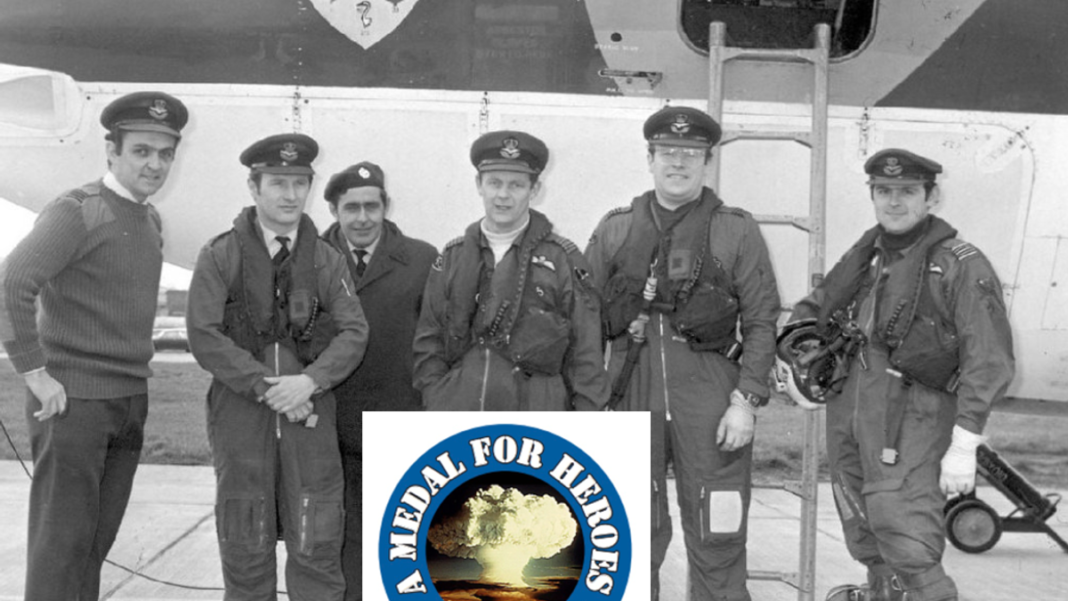

Hundreds of brave individuals who participated in dangerous missions amidst radioactive fallout in the Pacific will soon receive recognition in the form of a medal. These veterans, who were involved in monitoring significant nuclear explosions by France and China for the Royal Air Force and Royal Fleet Auxiliary, were previously excluded from receiving the nuclear test medal due to stricter guidelines set by the previous government.
Defense Secretary John Healey expressed gratitude towards the nuclear test veterans for their role in safeguarding the security and freedoms of the UK. The long-overdue nuclear test medal, introduced in 2023 following a campaign by Mirror, has been awarded to nearly 6,000 British bomb test veterans in Australia and Christmas Island between 1952 and 1967.
The eligibility for the medal has now been extended to include RFA civilian crews that monitored explosions at sea and RAF crews engaged in intelligence gathering during French tests until 1974 and Chinese tests until 1980. Many of these veterans have reported health issues such as cancer and birth defects, believed to be linked to radiation exposure.
One such veteran, John Cammish, who served as ground crew chief in the RAF, passed away in 2020 due to cancer related to radiation exposure. His widow, Lucy, expressed happiness at the recognition their sacrifices are finally receiving.
The decision to honor more nuclear veterans with the Medal for Heroes fulfills a promise by the Labour government. However, some veterans have declined to accept the medal, pointing out that certain comrades, including those who handled contaminated aircraft upon return to the UK, are still excluded from eligibility.
Colin Duncan, a former RAF ground crew member, advocates for extending the medal to all veterans and upgrading it to a full military honor. He emphasized the risks and services provided by all personnel involved in the missions, regardless of their specific roles.
Barry Fagg, who assisted in decontaminating planes after French hydrogen bomb tests, has chosen not to pursue the medal, citing concerns over the lack of protection and proper acknowledgment of the risks they faced.
Campaigners continue to push for justice for victims of the Nuked Blood Scandal, uncovering hidden blood tests and advocating for a comprehensive study on the health impacts experienced by foreign test participants. They hope to include these individuals in a government study on nuclear veterans’ health in the long term.