
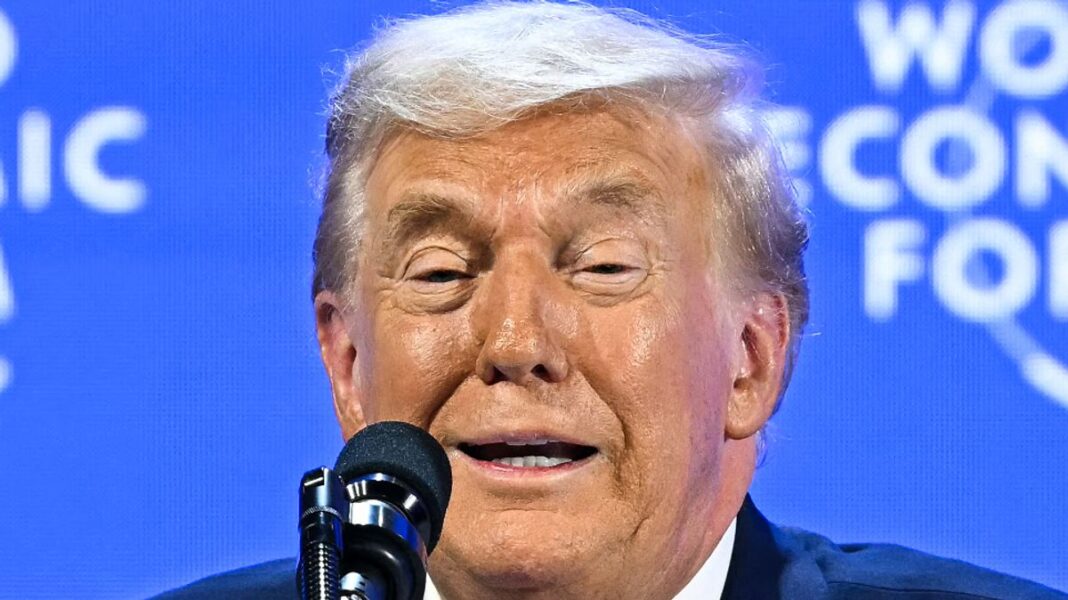

Donald Trump’s appearance at Davos aimed to garner admiration but instead showcased his penchant for self-aggrandizement. The President’s speech, intended to be statesmanlike, veered into a self-indulgent monologue where he boasted about being adored by NATO leaders to the extent of being called “Daddy.” This surreal narrative painted a picture of world leaders fawning over him, a stark contrast to the reality perceived by onlookers at the event.
Throughout his address, Trump exhibited a series of contradictions, historical inaccuracies, and blatant falsehoods with unwavering confidence. His peculiar fixation on Greenland, which he mistakenly referred to as Iceland multiple times, took center stage. He ambiguously hinted at territorial acquisition, asserting America’s potential to be “unstoppable” if it chose to seize Greenland.
In a brazen display of entitlement, Trump implied that the United States should have “ownership” of Greenland under the pretext of defense, disregarding the existing military presence in the region. His discourse included chastising Denmark for defense spending and resorting to historical intimidation tactics by suggesting that Europe would be under different rule without American intervention.
Trump’s rhetoric at Davos extended to questioning NATO’s commitment to defending the U.S. in times of crisis, a claim that disregarded historical facts. His remarks on Ukraine further delved into a realm of delusion, attributing global peace to his persona and perpetuating baseless allegations of election rigging, a recurring theme in his speeches.
The underlying theme of Trump’s address was his insatiable craving for approval and reverence. His erratic behavior, characterized by a lack of coherence and accountability, painted a troubling picture of American leadership. The brazenness with which he disregarded international norms and mocked allies exemplified a concerning departure from diplomatic norms, reflecting a dangerous blend of self-importance and unpredictability.
In essence, Trump’s Davos appearance shed light on a leader detached from reality, driven by ego and a quest for affirmation. Rather than projecting strength, his performance highlighted a concerning detachment from facts and a perilous disregard for diplomatic decorum. This portrayal of leadership, marked by grandiosity and a distorted sense of reality, raises valid concerns about the stability and credibility of the U.S. administration on the global stage.