
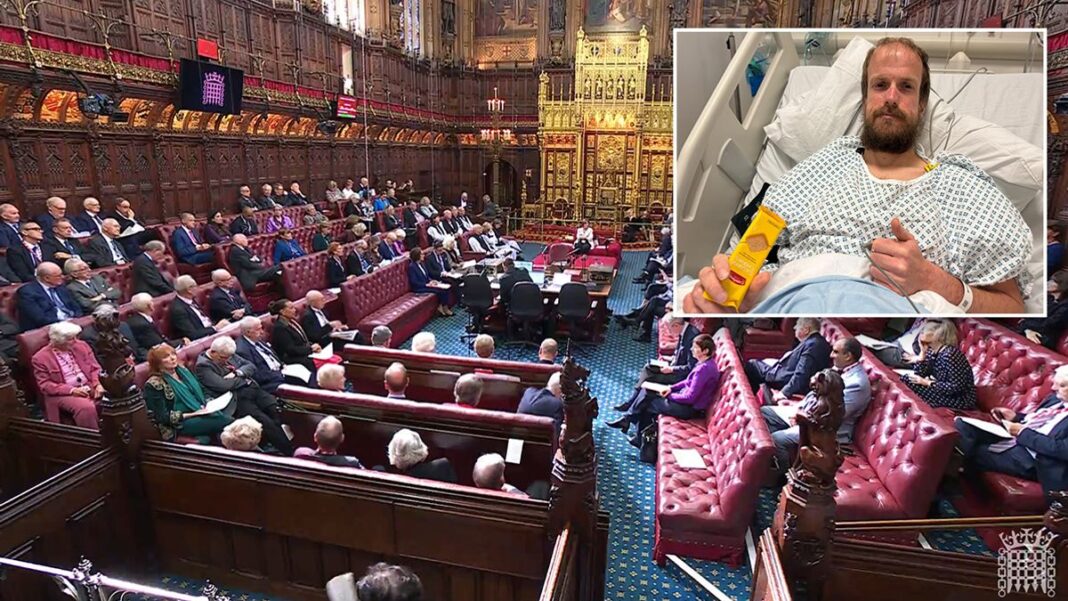

A recent survey conducted by Dignity in Dying revealed that a majority of people disapprove of the House of Lords delaying the passage of a bill after it has been approved by the Commons. The research found that 58% of respondents view it as unacceptable for the Lords to stall a bill that has already been passed by the Commons, while only 17% support such actions. Additionally, 24% of individuals believe it is acceptable for the Lords to introduce amendments that could potentially derail the bill.
The House of Lords has come under scrutiny for allegedly obstructing the progress of the Assisted Dying bill by proposing an unprecedented 942 amendments during the Committee Stage that commenced today. This move has been criticized for potentially sabotaging the bill, causing distress to individuals like a dying music teacher who expressed concerns about the implications of parliamentary delays on his end-of-life care.
Nathaniel Dye, a terminally ill individual from east London, voiced his apprehensions about the bill being hindered by legislative tactics, emphasizing the urgent need for compassionate end-of-life provisions. He highlighted the urgency of passing the bill to alleviate the suffering of terminally ill individuals and their families, urging the Lords to prioritize the voices of those directly affected by the current laws.
The emotional plea from individuals like Jenny Carruthers, who shared her personal experience and desire for a peaceful death surrounded by loved ones, underscores the importance of considering the perspectives of those facing terminal illnesses. The plea for empathy and understanding in decision-making processes related to end-of-life care resonates with the broader public sentiment supporting the bill.
As the debate unfolds in the House of Lords, stakeholders like Sarah Wootton, CEO of Dignity in Dying, stress the necessity of focusing on the real-life impact of the legislation on terminally ill individuals and their families. The call for respectful deliberation, free from procedural hindrances, underscores the urgency of addressing the needs of those affected by the existing legal framework surrounding end-of-life choices.
The stories shared by individuals like Louise Shackleton, who faced challenges accessing dignified end-of-life options, serve as poignant reminders of the human toll of legislative delays and political maneuvers. The insistence on humane and compassionate reforms in end-of-life care policies reflects a growing demand for change that prioritizes the well-being and dignity of individuals facing terminal illnesses.
In the face of mounting opposition and procedural roadblocks, advocates emphasize the need for a fair and transparent legislative process that upholds the wishes of terminally ill individuals and their families. The public support for the bill, coupled with the backing of the elected Commons, underscores the importance of honoring the voices of those directly impacted by end-of-life care decisions.