
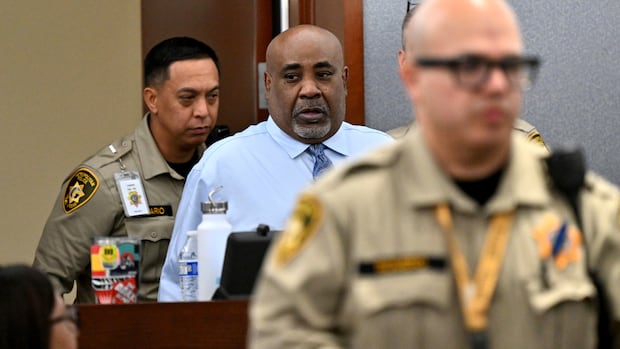

The trial of former gang member Duane (Keffe D) Davis, accused in the unsolved murder of iconic rapper Tupac Shakur, commenced with the selection of the jury after nearly three decades since Shakur’s tragic death. Charged with murder with a deadly weapon linked to gang activity in 1996, Davis, who has been incarcerated since 2023, maintains his innocence. The trial is underway in Las Vegas, the location of the shooting, and is anticipated to span about a month.
Prosecutors will not focus on proving that Davis fired the fatal shots. Instead, they aim to persuade the jury that he held a prominent role within the group that targeted Shakur during the incident on the Las Vegas Strip on September 7, 1996. During the jury selection process, Davis, dressed in a blue shirt and tie, sat alongside his lawyer as Nevada Judge Carli Kierny questioned a panel of 75 potential jurors regarding various aspects, including medical conditions, language barriers, and conflicts with serving.
While acknowledging that the trial may bring some level of accountability, William Leslane, Shakur’s cousin, expressed that the pursuit of justice has been significantly delayed. He emphasized the lack of a thorough investigation into Shakur’s murder at the time of the incident, stating that seeking justice three decades later appears somewhat diminished.
A substantial portion of the trial’s evidence is expected to be derived from Davis’s co-authored book, “Compton Street Legend,” published in 2019, where he detailed his alleged involvement in the shooting. Shakur, a prominent figure in the rap scene, known for hits like “Dear Mama” and “California Love,” was affiliated with West Coast hip-hop, despite being born in New York City. His association with Death Row Records, a renowned rap label, added to his influence in the industry.
The night of the shooting, Shakur and Death Row Records co-founder Marion (Suge) Knight were in Las Vegas to attend a boxing match. Following the event, they drove around the city in a Death Row-owned vehicle, where the fatal shooting occurred. The incident sparked widespread speculation and conspiracy theories, given the intense rivalry between East and West Coast rap artists during that era.
Davis’s book provides insight into the events leading up to the shooting, citing a perceived act of retaliation that escalated into tragedy. The book recounts the details of the encounter between Shakur, Knight, and Davis’s group, shedding light on the sequence of events that culminated in the shooting. Lucius Outlaw III, an associate law professor, highlighted the significance of three key pieces of evidence in the trial, including Davis’s book and related interviews.
Despite regret expressed by Davis in his book regarding Shakur’s shooting, the enduring legacy of the talented rapper and actor remains a focal point. Shakur’s multifaceted talents, spanning music, acting, and poetry, continue to resonate with fans and scholars alike, underscoring his dynamic presence in the hip-hop culture of his time.