

Northwestern Ontario is currently facing the challenge of 110 active wildfires, as reported by Ontario’s Aviation, Forest Fire and Emergency Services (AFFES) on Tuesday night. Among these wildfires, 11 are uncontrolled, six are being contained, 10 are under control, and the rest are being monitored.
Five new fires were confirmed in the northwest region on Tuesday evening. Thunder Bay 79 (THU079) is situated near Dog Lake, about 18 kilometers west of Highway 527, with a controlled fire of 0.1 hectares. Thunder Bay 80 (THU080) is located south of Athelstane Lake, around 24 kilometers west of Highway 17, with a 0.1-hectare fire that is not yet under control. Fort Frances 65 (FOR065) is positioned in Quetico Park near Baird Lake, roughly three kilometers southeast of McDougall Lake, and is being held at 0.3 hectares. Kenora 29 (KEN029) is located south of Moth Lake, approximately two kilometers south of Highway 17, with a 1.5-hectare fire that is uncontrolled. Dryden 62 (DRY062) exists on an island on Sturgeon Lake, near East Bay, with a 0.1-hectare fire under control.
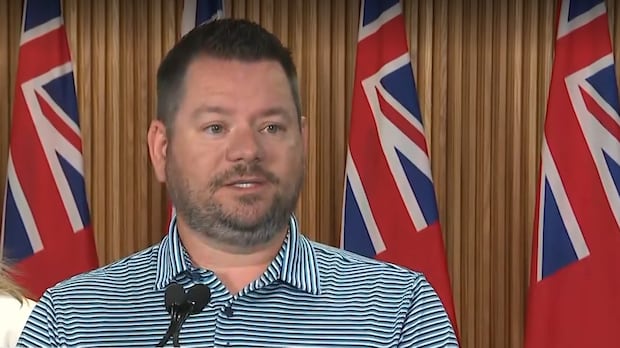
While most of northwestern Ontario has a low to moderate forest fire hazard, significant high-risk areas are prevalent across southwestern regions, including Thunder Bay and Kenora districts. According to Mike Harris, the Minister of Natural Resources, the province has been tackling various challenging fires over the past month, especially in the Quetico area and regions near the Canada-U.S. border and Wabakimi north of Lake Nipigon, following a major lightning storm. Harris emphasized the collaborative efforts of over 150 Ontario fire crews, supported by nearly 100 aircraft, including helicopters and water bombers, working closely with partners from across Canada and North America to ensure public safety.
As the situation evolves, some partner resources are expected to relocate back to their respective regions, with some already returning to Alberta and now being redeployed to British Columbia. Noteworthy fires in the region include the Rinker Complex, comprised of Thunder Bay 36, Dryden 34, and Dryden 35, which collectively cover extensive areas and remain uncontrolled, necessitating evacuation orders. Similarly, the Atikokan Cluster, including Fort Frances 13, 14, and 15, also pose challenges as they are not yet under control, with evacuation orders and alerts in effect.
Roughly 1,150 individuals remain displaced
As of Tuesday, evacuation measures have impacted 14 communities, with six having returned home, and one in the process of repatriating its members. Minister Jill Dunlop highlighted that approximately 1,150 evacuees are still accommodated in host communities across the province. The ministry has conducted numerous coordination calls with various stakeholders to address the evolving situation.
Evacuation and Implementation Orders
Evacuation orders and alerts remain applicable to areas surrounding specific fires, necessitating immediate action or preparedness for potential evacuation. Those under evacuation orders must vacate the area promptly, while individuals under alerts are advised to be ready for evacuation.
Furthermore, the Ministry of Natural Resources continues its efforts to manage the fire situation effectively, ensuring public safety and supporting affected communities. The restricted fire zone remains in effect for certain parts of northwestern and northeastern Ontario, prohibiting open-air burning activities.
Updates on implementation orders and evacuation statuses are regularly communicated to the public to maintain awareness and ensure compliance with safety measures. The Ministry’s commitment to enhancing firefighting capabilities and supporting affected communities is evident through additional funding, resources, and personnel allocated to combat the wildfires.
Tag: rewrite-pending