
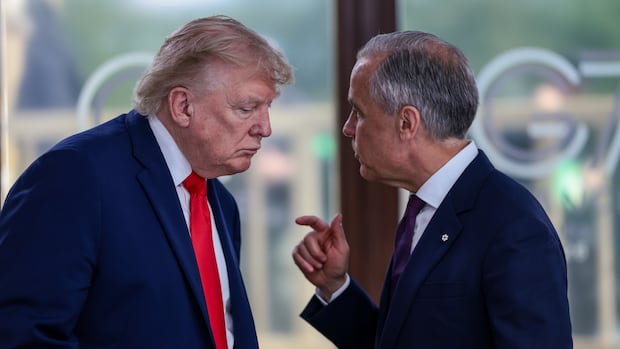

Canada is in ongoing discussions with the United States to secure a trade agreement that would prevent the implementation of President Donald Trump’s impending tariffs and potentially provide relief from existing tariffs in critical industries. Despite multiple meetings between Canadian and American negotiators in recent weeks, both countries have reached a stalemate as negotiations near a crucial stage.
Reports indicate that Canadian negotiators are concerned about the looming possibility of facing a 50 percent tariff on numerous Canadian products as the U.S. remains firm on its demands while Canada attempts to persuade provinces to ease restrictions on American alcohol imports. The U.S. justifies its tariff imposition by citing alleged discriminatory practices by Canada in the automobile, dairy, and alcohol sectors.
In the automotive sector, the U.S. is proposing to reduce current auto tariffs from 25 percent to 15 percent overall, potentially dropping further to 7.5 percent for Canadian-made vehicles with increased U.S. content. However, Canadian officials view this offer as insufficient. The U.S. claims issues within Canada’s auto trade as a justification for their tariff threats.
Regarding dairy, President Trump has long criticized Canada’s supply management system, particularly the restrictions on U.S. dairy imports. The U.S. administration argues that Canada’s dairy treatment is uneven, leading to the imposition of a 50 percent tariff threat. Sources suggest that Canada may need to make concessions in the dairy sector, a move that could pose challenges for the government, especially in provinces like Quebec.
In the alcohol industry, the federal government has urged provinces to prepare to reintroduce U.S. alcohol in stores if a tariff agreement is reached. However, some provinces have maintained bans on U.S. alcohol sales, complicating negotiations. Ontario Premier Doug Ford emphasized that a fair deal addressing key sector tariffs is essential for lifting the alcohol ban.
Canada is also pushing for reduced tariffs on steel, aluminum, and copper by the U.S., which currently range from 10 to 50 percent. Efforts to support these sectors include a $1 billion loan program and a $100 million initiative to cover transportation costs for Canadian steel. Discussions on softwood lumber tariffs have hit a roadblock, with the U.S. showing reluctance to negotiate on this matter separately from other tariffs.
Furthermore, the U.S. is seeking preferential access to Canadian critical minerals as part of the deal, along with security and energy provisions. Canada’s strategic mineral projects align with U.S. interests, and Trump’s recent investment in critical minerals underscores the importance of securing domestic supply chains.
The potential trade deal also involves reviewing Canada’s F-35 fighter jet purchase from the U.S., a decision initiated in response to diplomatic and trade tensions. National Defence Minister David McGuinty expressed optimism about the ongoing negotiations regarding the F-35 purchase, highlighting the importance of a successful outcome for both countries.