

Parts of British Columbia are experiencing severe drought conditions this summer. In Bessette Creek, water restrictions have been imposed to protect salmon populations due to low water levels. Temporary protection orders for the Salmon River watershed were initially issued in July, then rescinded in early August due to wildfire risks, and later reissued in August.
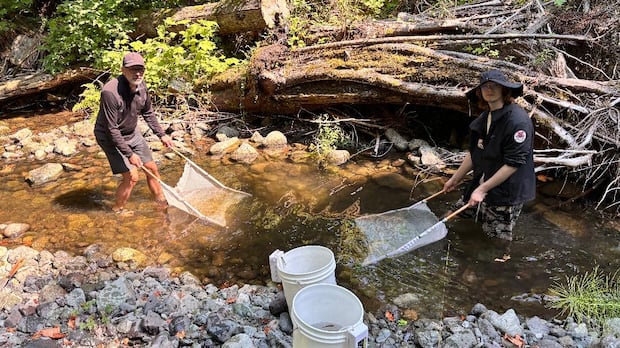
Bob Crandall, treasurer of the Cowichan Lake Salmonid Enhancement Society, mentioned that streams connected to Lake Cowichan are getting drier each year. To mitigate this, the society conducts fry salvage operations to rescue fish from drying rivers and relocate them to other water bodies.
While local communities support these efforts, scientists caution that such interventions have limitations and may not be a sustainable long-term solution. Crandall, along with the Ts’uubaa-asatx Nation and volunteers, work together to relocate various fish species to areas with more water. However, the changing climate has made the task more challenging, with streams drying up farther upstream than before.
Efforts involve using aerators and nets to transport fish, a process that can be arduous, especially in hot weather. The importance of these rescue operations lies in preserving fish populations and maintaining their presence in the ecosystem.
The Ts’uubaa-asatx Nation plays a crucial role in fry salvage activities, utilizing drones to identify drying streams. The Nation’s commitment to salmon conservation reflects their cultural connection to the species and their dedication to ensuring salmon sustainability for future generations through river restoration efforts.
In France, similar rescue operations are facing challenges exacerbated by severe drought and extreme heat. Fish relocation initiatives have become ineffective, with climate change causing unprecedented weather events and stressing aquatic ecosystems beyond their capacity.
Jean-Pierre Faure from the Fédération de Pêche du Rhône highlighted the detrimental impact of rising water temperatures on fish health and survival. He emphasized the need for ecosystem restoration and sustainable water management practices over short-term interventions like fish relocation, which can be costly and ineffective on a large scale when watersheds are extensively dry.