
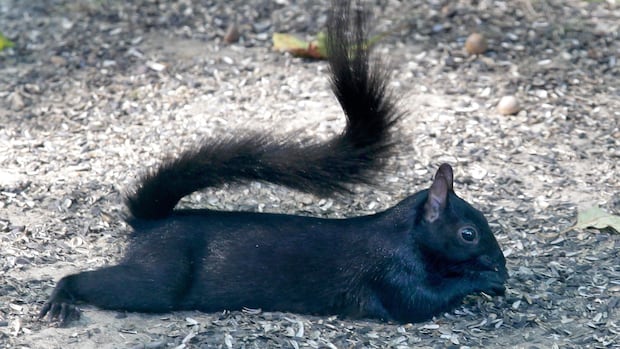

Francis Quang-Hai Dinh spent his first summer at McGill University exploring Montreal’s parks on his bicycle, tracking down squirrels. He visited nearly 200 green spaces, documenting over 800 grey and black squirrels. What began as a school project evolved into a personal mission to understand how the city’s layout and waterways influence evolution subtly.
“I developed a fascination for squirrels after observing them closely and contemplating their existence,” Dinh expressed. Despite squirrels often being considered pests rather than wildlife, he grew to appreciate their role in nature.
Due to limited public transportation options in suburban areas and lacking a car, Dinh relied on his bike to conduct manual surveys of squirrels in parks across the region, a unique endeavor among researchers.
In his research, Dinh noted that approximately 12% of squirrels in Montreal are black on average. The further north he ventured, the higher the prevalence of black squirrels. In areas just north of Laval, he discovered up to 40% of squirrels had black coats, indicating a significant variation across different regions.
The study identified temperature as a key factor influencing squirrel coat coloration, with cooler climates favoring black squirrels due to their better heat absorption capabilities. Additionally, forest cover played a role, as denser tree canopies provided a darker backdrop where black squirrels were more camouflaged.
Allison Roth, the study’s senior author and an assistant professor at the University of Missouri, emphasized that the research focused on using squirrels as a model to explore how urban environments drive evolutionary changes. Montreal’s diverse neighborhoods, varying tree cover levels, and natural boundaries like waterways create micro-environmental differences that lead to genetic and physical adaptations within animal populations.
The study highlighted the intricate relationship between urbanization, local vegetation structure, and winter microclimate in influencing melanism in squirrels. Contrary to previous beliefs, the research indicated that urban sprawl and natural barriers like riverways indirectly impact melanism through environmental factors.
Published as part of a special feature by ecology journals, the study underscores the importance of collaboration and data analysis in addressing significant ecological questions. Dinh reflected on his transformed perspective towards wildlife, recognizing the coexistence of nature and urban development.
In conclusion, the study sheds light on the nuanced interplay between urban environments and wildlife evolution, showcasing the intricate adaptations of squirrels in response to their surroundings.