
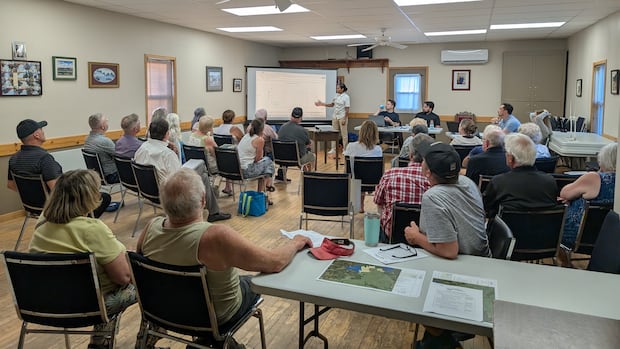

Residents in the Waterford area near Sussex have expressed concerns over a potential conflict of interest tied to a consulting firm involved in a proposed wind farm project. The firm, Dillon Consulting, has contracts with both Natural Forces, the project proponent, and the Kings Regional Service Commission, responsible for delivering services on behalf of local governing bodies.
Mary Ann Coleman, a former committee chair for the Waterford Local Service District, highlighted worries among community members regarding the firm’s dual role, raising doubts about the integrity of the project’s approval process.
Construction of the initial 15 wind turbines is slated to commence in the fall, following the approval of the project’s environmental impact assessment and the signing of a power purchase agreement with N.B. Power. The wind farm, known as the Paqt’smawei Sipu Wind Project, is a joint venture involving Natural Forces, Indian Island First Nation, and Mi’gmaq United Investment Network.
Tess Donohue, the project manager for the wind farm at Natural Forces, noted that Dillon Consulting has been engaged in the project since 2024, handling tasks such as the environmental impact assessment. The consulting firm, with offices across Canada, including in Fredericton, Saint John, and Moncton, also provides planning services for the service commission.
While Donohue sees no conflict of interest, CBC News’ attempts to secure interviews with the service commission and Dillon Consulting went unanswered. The Kings Rural District, representing the Waterford area, also did not respond to interview requests.
The wind farm project still awaits certain permits and must fulfill specific conditions before the planned construction start in the fall. One crucial step involves obtaining a development permit from the regional service commission, which Natural Forces has applied for to revise Waterford’s rural plan to allow for the installation of large-scale wind turbines.
The amended plan, if approved, would permit the construction of wind turbines exceeding three megawatts in rural use zones, subject to government regulations and guidelines on sound and shadow. The current plan already outlines regulations for smaller wind turbines.
Concerns have been raised about a proposed adjustment to the definition of dwelling units in the plan, potentially affecting seasonal property owners in the area. Coleman, involved in the plan’s initial development, emphasized the importance of preserving Waterford’s character and rural lifestyle.
The commission’s planning committee has endorsed the amendment, which now awaits final approval from Local Government Minister Aaron Kennedy after public input is sought.