
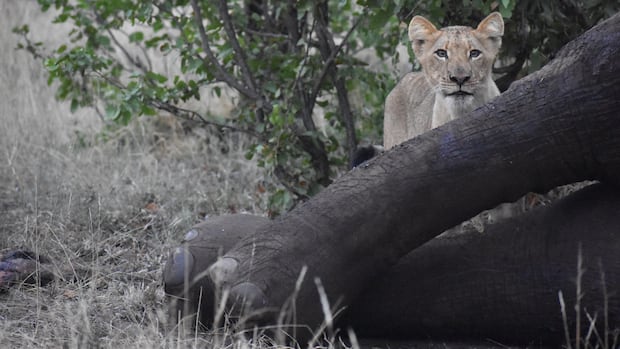


In the vast African savannah, elephants are found to have a profound impact even after their demise.
A recent research conducted by a global team of scientists in Kruger National Park, South Africa, sheds light on the ecological significance of elephant carcasses.
These majestic creatures, often known as “ecosystem engineers,” play a vital role in shaping the savannah during their lifetime through various activities. However, the study aimed to explore whether their impact persists post-mortem.
Courtney Reed, a prominent ecologist and the lead author, shared that the study aimed to investigate the role of elephant carcasses in sustaining the ecosystem post-decomposition.
The research results were presented in the Proceedings of the National Academy of Sciences of the United States of America. Reed, currently affiliated with Princeton University, conducted the research during her tenure at the University of California Santa Barbara.
Sustainable Renewal Process
Through an analysis of soil composition, biodiversity, and animal behavior around elephant remains, the researchers discovered a substantial release of nutrients during decomposition. This nutrient influx stimulated microbial activity in the soil, fostering the growth of nutrient-rich plants that attracted herbivores to the area long after the carcass had decayed.
The impact of decomposition was observed to persist for over seven years following the death of the elephants.
Although there is a delay in the regrowth process, as the high nutrient concentration initially inhibits vegetation growth, leading to sparse areas known as “cold spots” in biodiversity, according to Reed.