Preliminary estimates from the Regional District of Okanagan-Similkameen indicate that approximately 150 structures have suffered damage or been completely destroyed due to the Bald Range fire.
On Sunday, additional evacuees from Summerland and nearby areas returned home, with officials expressing hopes that more will be able to return in the upcoming days.
The B.C. Wildfire Service (BCWS) reports that firefighting strategies for the Bald Range fire will likely shift towards the northwest, anticipating hotter and drier weather in the coming week.
As of Monday morning, around 130 wildfires were active across B.C., the majority ignited by lightning.
Regional district provides update on property damage
On Monday evening, the Regional District of Okanagan-Similkameen announced that approximately 150 structures have been impacted by the Bald Range fire.
Graham Statt, the chief administrative officer of the District of Summerland, noted that about 40 of those structures are located within the boundaries of the municipality.
“This is a rough estimate and it’s an evolving figure,” Statt commented.
Currently, it remains uncertain what types of structures were affected, and officials cannot confirm how many, if any, were residential homes.
Statt stated that efforts are ongoing to reach out to property owners.
Damage assessments in Summerland concluded
The mayor of Summerland announced that damage assessments have been finalized as more residents return to the community after evacuating due to the uncontrolled Bald Range wildfire that ignited on August 7.
According to Summerland Mayor Doug Holmes, around 22 percent of the 5,500 properties that were under evacuation orders due to the wildfire in the south Okanagan have now been downgraded to evacuation alerts as of Sunday.
The Regional District of Okanagan-Similkameen confirmed that these alerts are effective for properties located east of Highway 97 and in the Trout Creek neighborhood west of the highway.
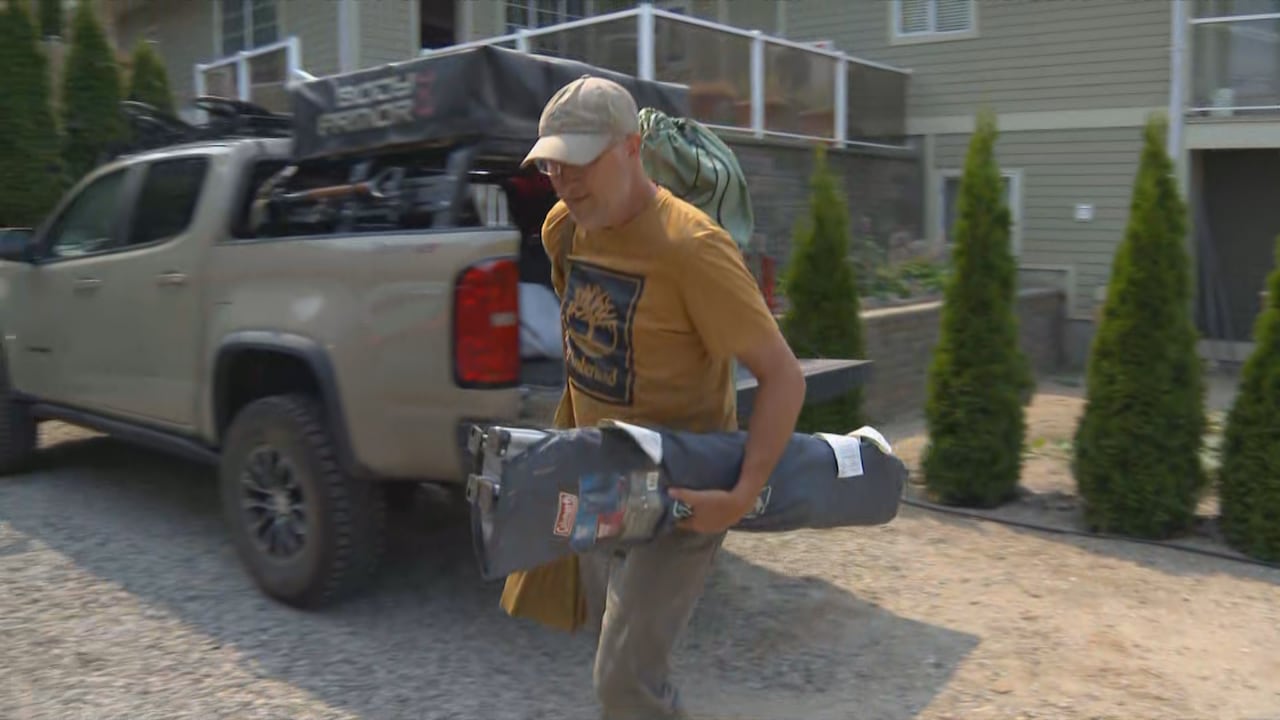
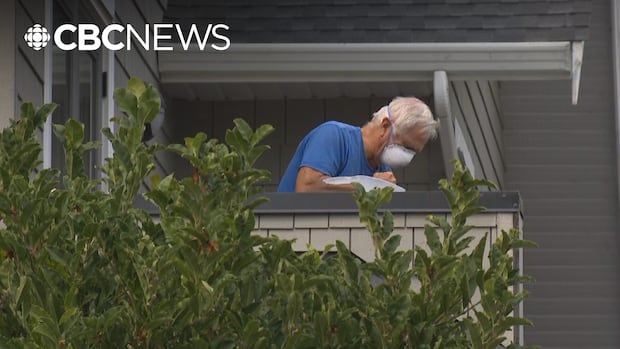
Zane Scullard was among thousands of Summerland evacuees who returned home after evacuation orders were downgraded to alerts on August 16. The mayor of Summerland mentioned on Sunday that residents of 1,200 properties, out of a total of 5,500 that were evacuated, can return. (Justin Pennell/CBC)
Holmes expressed hope that more evacuees would return in the days ahead, although fire conditions are subject to change.
<p“The reason we can allow people back into Summerland is that the fire is moving away from the community,” he explained. “However, winds can shift, and the fire might change direction.”
“Therefore, we must remain vigilant and not get ahead of ourselves,” he added.
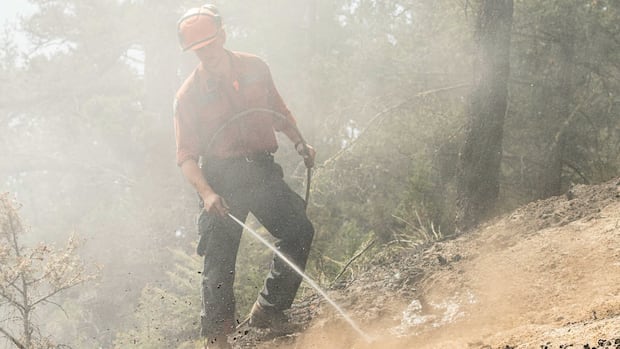
Hugh Murdoch from the B.C. Wildfire Service reported that crews are actively working to eliminate hot spots in Summerland, successfully reducing the fire perimeter closest to populated areas.
He indicated that firefighting efforts will likely move northwest, where fires are encroaching on more forested regions, as hot and dry conditions persist.
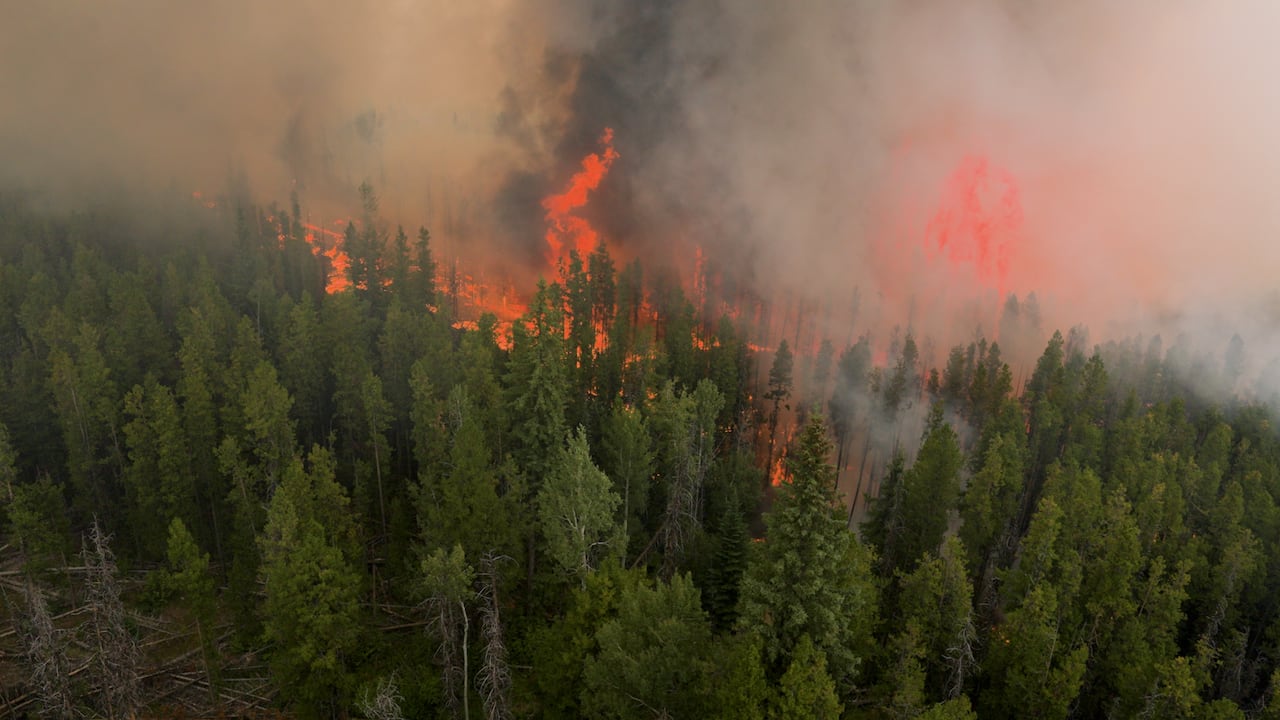
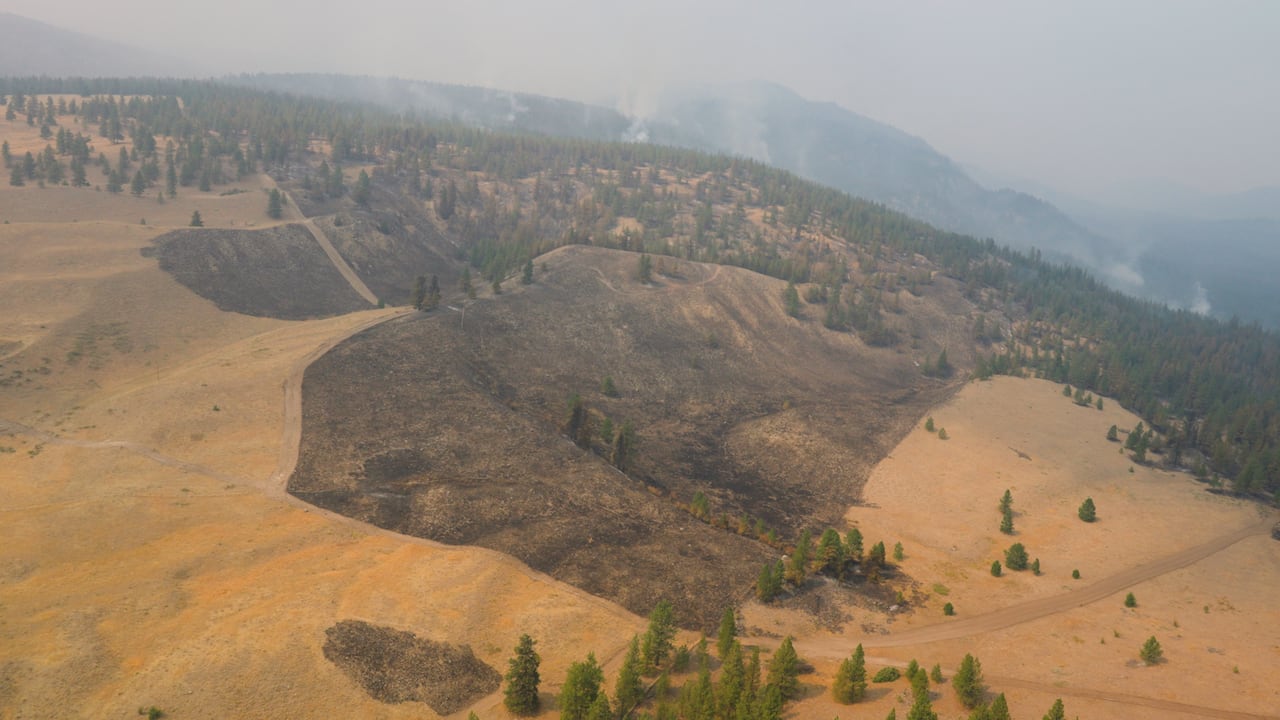
The west flank of the Bald Range wildfire near Summerland is seen on August 16. (B.C. Wildfire Service)
In a Monday update, the BCWS noted that the northwestern section of the fire near the Princeton-Summerland Road has posed challenges, but there remains a “considerable distance” between the fire and the community.
Residents should anticipate seeing smoldering ground fires and smoke from within the fire perimeter in the weeks ahead.
“This is typical after significant wildfires and is generally not a concern. Any smoke emanating from green, unburned areas outside the fire perimeter should be reported,” the update stated.
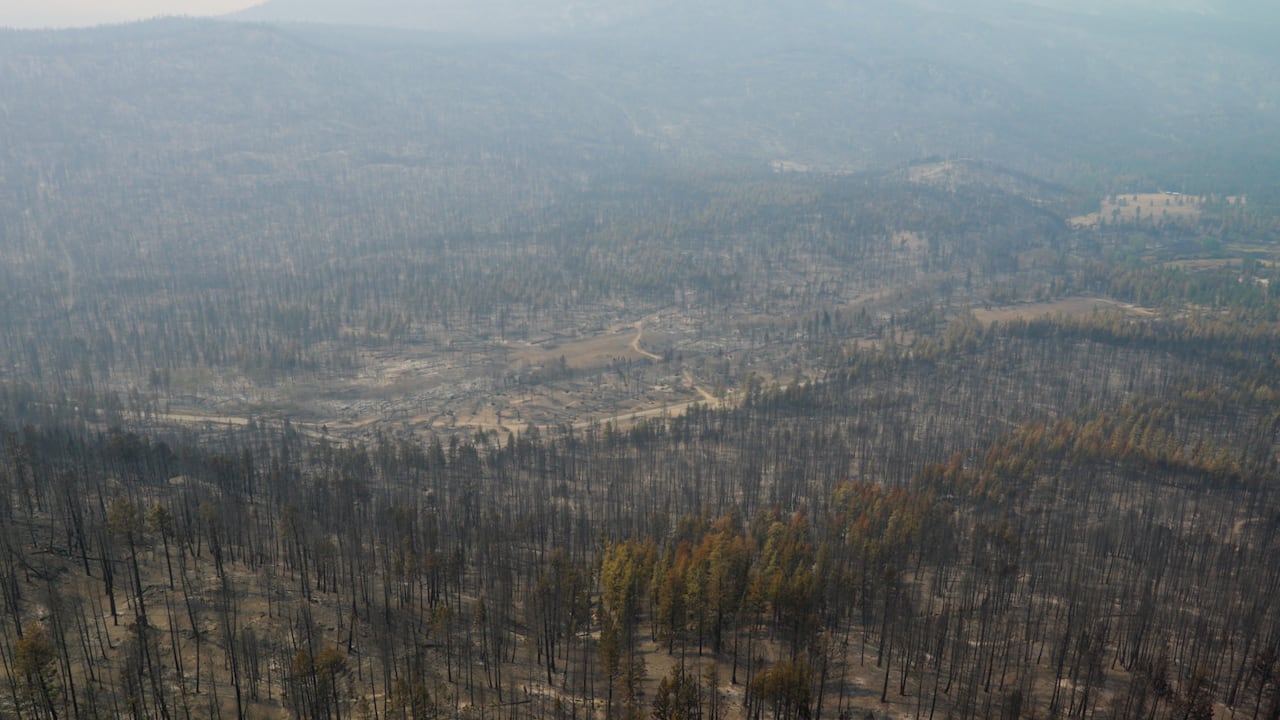
Some of the areas burned by the Bald Range wildfire near Summerland, pictured on August 16. (B.C. Wildfire Service)
Holmes recognized the frustration among residents who are still uncertain about the status of their properties but assured that notifications and support would begin now that damage assessments are complete.
“There is still work to be done to ensure everyone can return, but we anticipate that most people will be back fairly soon,” he remarked.
‘A bittersweet joy’ in returning home
For numerous residents, the recovery process will be lengthy.
Roie Manoff, a former fighter pilot turned winemaker, described the fire as brutal, chaotic, rapid, and vast as it swept through the town.
Manoff, who owns Silkscarf winery, expressed that the fire has left a lasting impact, as many of his friends and colleagues have lost their homes.
Having faced numerous challenges throughout his life, he emphasized that after over two decades in business, he understands the futility of trying to combat nature.
“We need to accept that this might be the new norm. We must be prepared,” Manoff stated. “It’s essential to provide updated, accurate information to those in need and hope for a better future.”
The south flank of the Bald Range wildfire is depicted on Sunday, August 16. (B.C. Wildfire Service)
Connie Denesiuk described her return to her Summerland residence on Sunday as “bittersweet.”
“It feels like a bittersweet joy because we realize that some of our neighbors are still not home, and we empathize with them,” she shared on Daybreak South on Monday.
Denesiuk mentioned that she was pleasantly surprised to find “not as many dead plants as I had expected” and successfully managed to reset her refrigerator.
“We understand the anxious feeling of waiting to learn what they will discover when they return home. Our thoughts are with them,” she added.
Smoke expected to persist as winds remain mild: BCWS
The BCWS indicated over the weekend that smoke will continue to affect central and southern B.C., with light winds prevailing as the week begins.
“Throughout the upcoming week, the province will continue to experience higher temperatures and drier conditions, except for the far northwest region,” the agency stated.
Environment Canada reported that extensive areas of southern B.C. are currently under either an orange or yellow air quality warning due to wildfire smoke.
The weather agency noted that these regions are either being affected or are likely to be impacted by smoke for at least the next two days.
Following last week’s rapid spread of wildfires across B.C., firefighting assistance has arrived from other Canadian provinces as well as regions like Mexico and Australia.
Blake Ross, a representative for the Australia-New Zealand firefighting contingent, mentioned that 40 firefighters from his region are engaged in combating the blazes.
Ross noted that conditions around B.C.’s most concerning fires are dynamic, changing rapidly with the weather.
“The fires can quickly gain size when they encounter dry fuel,” he explained regarding the fire behavior. “This type of unpredictability is less common in Australia, where conditions are more stable.”
“This situation appears to be considerably more erratic than we are accustomed to,” he added.
He spoke with CBC News on Sunday near the Bald Range wildfire, which continues to burn uncontrollably and was measured at over 212 square kilometers as of Monday morning.
In other wildfire-affected areas within the province, the Thompson-Nicola Regional District announced it would accept all fridges and freezers this week free of charge from residents who have been permitted to return to evacuation zones in the Village of Clinton and surrounding regions.
The district’s website stated that the appliances do not need to be emptied, but they should be sealed prior to disposal at the Clinton Eco-Depot.
Residents who prefer not to dispose of their appliances have been advised to double-bag spoiled food, discard it with regular garbage, and utilize personal protective equipment while cleaning.
Since the power outage caused by the Pear Lake fire last month, food has been decaying inside the appliances.
The Pear Lake wildfire near Clinton remains the largest active wildfire in the province, covering over 1,600 square kilometers as of Monday.
WATCH | Some Summerland evacuees return:
Some Summerland wildfire evacuees get green light to come home
August 16|
Duration
2:08
Meanwhile, the Brunswick Creek fire complex near Boston Bar, which comprises the Brunswick Creek fire and the larger adjacent Ainslie Creek fire, has expanded to cover over 740 square kilometers.
These fires continue to burn uncontrollably, leading to the ongoing closure of Highway 1 in the Fraser Canyon as a result.