
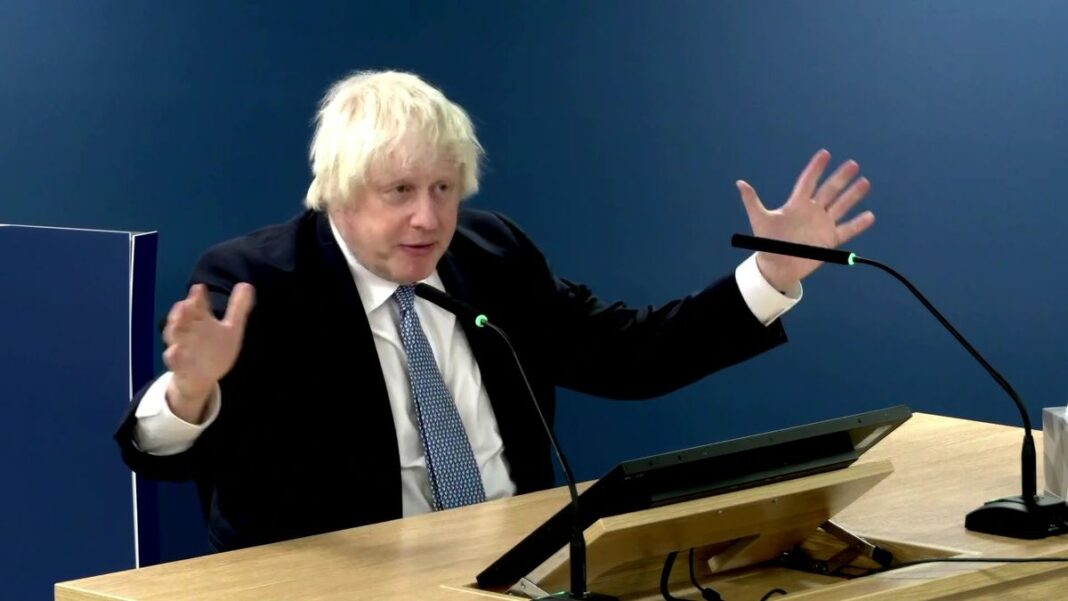

Boris Johnson has acknowledged the delayed realization of the severity of Covid-19 within his government during the pandemic. Speaking at the Covid-19 Inquiry, the former Prime Minister expressed his belief that children might have been better off exempted from lockdown measures. He faced scrutiny over the abrupt closure of schools and the impact on children’s well-being.
Reflecting on the past events, Johnson mentioned that the lockdown regulations, including the intricate rules and the “Rule of Six,” may have been too stringent, especially for children. He suggested that a different approach could have been considered to spare children from the restrictions.
England underwent a national lockdown from late March to June 2020, with strict guidelines limiting outdoor activities to essential purposes like purchasing food or seeking medical assistance. Subsequently, a “Rule of Six” was enforced in England, restricting social gatherings to a maximum of six individuals, which included children, unlike in Wales where they were exempt.
During the inquiry, Johnson was questioned about the lack of preparation for school closures and remote learning, which were abruptly announced in March 2020. He admitted that the government was slow to comprehend the gravity of the Covid situation.
As Johnson left the inquiry venue in London, he faced protests from parents of children suffering from Long Covid. The inquiry highlighted concerns about children in homes with inadequate care due to issues like mental health and addiction, potentially putting them at risk.
Research indicated that children’s development was significantly hindered by school closures and isolation, particularly for those in households lacking proper resources for remote learning. The inquiry revealed a lack of planning for remote learning until a sudden policy shift in mid-March 2020.
Despite acknowledging the necessity of school closures to prevent the spread of the virus and alleviate pressure on the NHS, Johnson expressed regret for any shortcomings in handling the situation. He emphasized the challenging circumstances faced by teachers and schools during the crisis.
In response to queries about accountability, Johnson affirmed his responsibility for the decisions made during the pandemic and expressed pride in the efforts of teachers and schools. He reiterated the belief that school closures were vital in saving lives and preventing healthcare system strain. England’s Chief Medical Officer also acknowledged the inevitability of school closures, suggesting room for improvement in their implementation.