
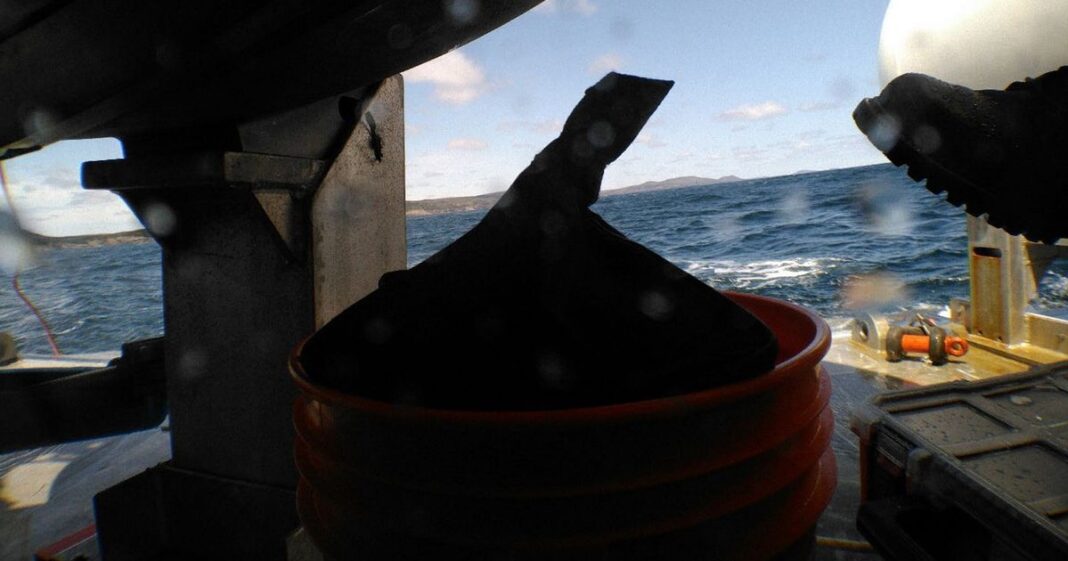

Eerie photographs have been unveiled following the recovery of an intact memory card from the remains of the ill-fated OceanGate Titan submersible. The vessel, valued at $4.2 million, collapsed in June 2023, approximately 372 miles southeast of St John’s, Newfoundland, in Canada, claiming the lives of all five individuals on board.
The National Transportation Safety Board (NTSB) has revealed the haunting images stored on the Titan sub’s camera memory card subsequent to its final report on the incident, which attributed the implosion to engineering deficiencies. The camera, situated on the exterior of the Titan’s hull, was designed to capture both video footage and still pictures at depths up to 6,000 meters.
Upon analysis at the NTSB’s Vehicle Recorder Laboratory, 12 still images and nine video clips were extracted from the SD memory card within the camera. The card is believed to be a SanDisk Extreme Pro 512GB model, valued at around £60 on online platforms like Amazon. Despite the outer casing of the camera remaining intact, the lens, visible through the sapphire optical window, was shattered.
The device’s survival during the implosion was attributed to its sturdy titanium construction, with the camera’s front optical window crafted from synthetic sapphire crystal to safeguard the lens and internal electronics. Several of the retrieved videos seem to have been recorded underwater, displaying consistent lighting and surroundings.
Additionally, the NTSB was able to identify the Launch and Recovery System (LARS) utilized for deploying and retrieving the OceanGate Titan submersible during training or missions. One underwater video displayed a diver swimming near the Titan, equipped with flippers and an apparent oxygen tank.
Furthermore, the NTSB identified other images and videos dated from May 2023, a month before the tragic event. These visuals depict scenes along the waterfront in Holyrood, Canada, and shots taken inside the Remotely Operated Vehicle workshop at the Marine Institute’s primary campus in St John’s, Newfoundland and Labrador.
The NTSB report highlighted that data could be stored either on the camera’s memory or an attached computer, depending on the setup. The investigation concluded that the camera was likely being configured to save data to the onboard computer on May 16th, with one image inadvertently stored on the camera’s SD Card before being correctly configured to save data to the computer aboard the submersible. No data dated after May 16th was found on the camera, indicating that none of the recorded data on the SD Card pertained to the fatal voyage or dive.