
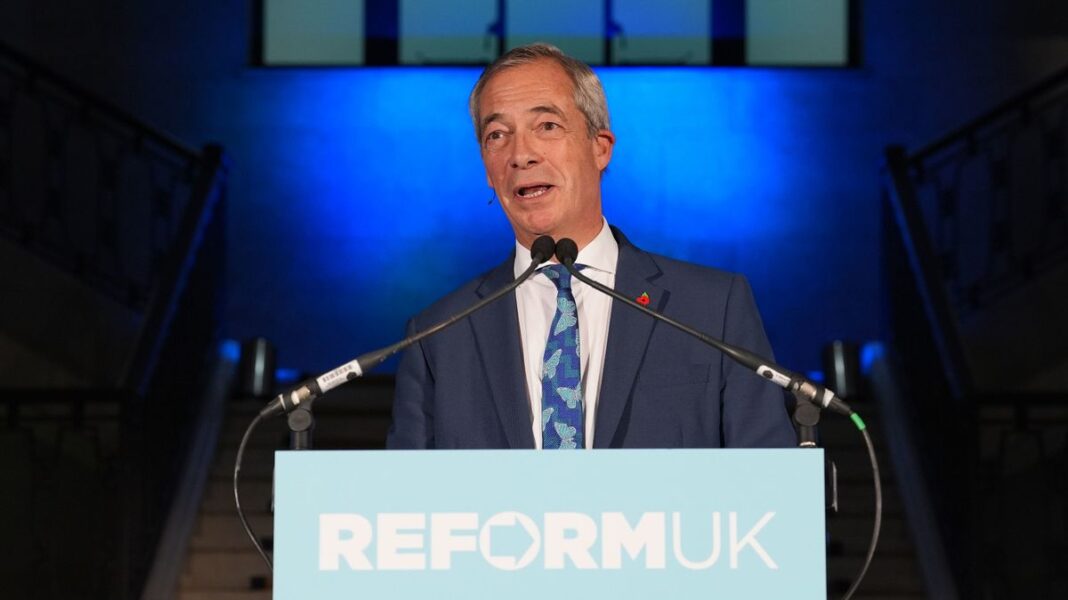

Nigel Farage is facing criticism for his proposed deep cuts to public services and potential betrayal of pensioners, with critics labeling his Reform party as “vultures.” During a speech in the City of London, the Reform UK leader abandoned tax pledges worth billions but indicated plans for welfare cuts and significant reductions in public spending if his party comes into power. Farage expressed concerns about economic instability post-Brexit, hinting at a potential general election in 2027.
Farage’s stance on key issues raised eyebrows as he refrained from committing to maintaining the pensions triple lock and suggested lowering the minimum wage for young workers. Additionally, his controversial proposal to assist wealthy foreign tycoons in evading taxes drew sharp criticism, with accusations of favoring hedge funds and financial speculators over ordinary workers.
The Deputy Leader of the Liberal Democrats, Daisy Cooper, accused Farage of targeting vulnerable pensioners to fund his anti-net zero agenda, emphasizing his lack of support for the elderly. She vowed to oppose Reform’s policies to safeguard pensioners from potential harm.
Although Farage reiterated his desire to implement tax cuts, he acknowledged the challenges of achieving substantial reductions given the current state of debt and finances. He also mentioned plans to introduce a Britannia Card, allowing wealthy overseas individuals to avoid taxes on foreign earnings and inheritance.
Furthermore, Farage hinted at the possibility of reducing the minimum wage for young employees, citing concerns about its impact on lower earners in conjunction with adjustments to National Insurance Contribution thresholds. The Reform party’s manifesto from the previous year proposed tax cuts equivalent to a third of the NHS budget, prompting skepticism from the Institute for Fiscal Studies for being overly ambitious and costly.
Responding to Farage’s speech, TUC General Secretary Paul Nowak criticized Reform as proponents of austerity, warning that their policies would intensify cuts to public services and jeopardize jobs in key sectors. Nowak condemned Farage’s approach, likening it to the Trump playbook and accusing him of prioritizing the interests of hedge funds over the well-being of working individuals.
In contrast, a Labour spokesperson criticized Farage’s austerity plans, highlighting potential risks to the NHS, education, and pensions. The spokesperson raised concerns about the cancellation of Labour’s investments in infrastructure and clean energy, which could endanger millions of jobs and disrupt family finances.
Farage’s emphasis on business stifling and tax revenue retention revealed his belief in trickle-down economics, advocating for a system where high earners contribute significantly to the tax revenue. He predicted a forthcoming general election amid economic challenges, projecting a shift towards austerity measures and potential discord within the Labour Party.
Tory Shadow Chancellor Sir Mel Stride criticized Reform’s economic proposals as lacking substance, pointing out unfunded promises and impractical spending plans that could lead to economic chaos rather than prosperity.