
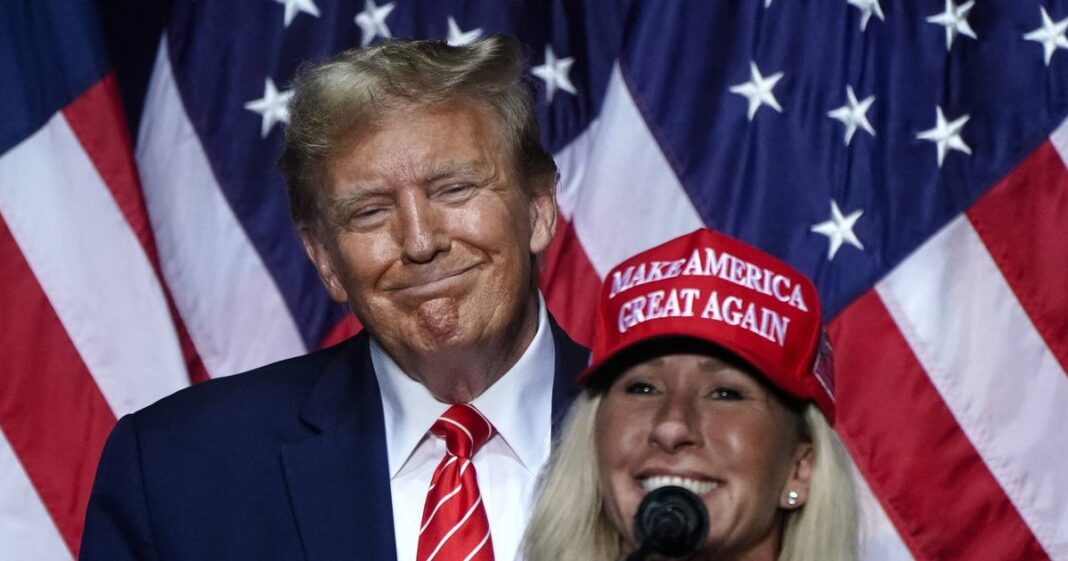

Republicans in Congress are facing a dire political threat from Donald Trump. The Epstein scandal, once just a distant concern, now looms as a political weapon aimed directly at Capitol Hill. Each Republican member must now weigh the risks of standing by Trump as the pressure intensifies.
Upcoming votes in both the House and Senate will determine the release of crucial files related to the Epstein case. If the bill passes, it will reach Trump’s desk, where he is expected to veto it not out of principle, but to shield himself. This veto will force Republicans to make a critical decision: override Trump and reveal the truth or be complicit in hiding it.
Failure to override the veto will only prolong the scandal, with continuous leaks and public scrutiny. Republican lawmakers will be relentlessly questioned and criticized for their allegiance to Trump over transparency and accountability. The consequences could be severe, especially during the midterms, as voters are increasingly disillusioned with politicians protecting a compromised president.
The looming possibility of Democrats regaining control of Congress adds further urgency. If this happens, a special prosecutor could uncover damaging information without Trump’s interference, potentially exposing deep-rooted corruption. The aftermath could render Trump’s presidency ineffective, leaving Republicans tainted by their reluctance to distance themselves from him.
The most viable solution for Republicans is to break away from Trump now, despite the risks. Overriding the veto and disassociating from Trump’s influence may be their only chance to salvage their reputation and avoid being dragged down with him. This shift is exemplified by Marjorie Taylor Greene, a staunch Trump supporter who has now turned against him, signaling a shift within the party.
The escalating feud between Greene and Trump symbolizes the party’s internal turmoil and imminent crisis. While Greene is taking a stand, others in the party remain silent, facing a critical decision that will shape the future of their political careers. Time is running out for Republicans to make a choice: prioritize truth and integrity or risk the party’s demise by shielding Trump and the contents of the Epstein files.
As the pivotal vote approaches, lawmakers must confront a fundamental question: when did the issue of pedophilia become a matter of political allegiance? This moral dilemma underscores the gravity of the situation facing Republicans in Congress, who must act swiftly to avoid being complicit in a potential cover-up.