
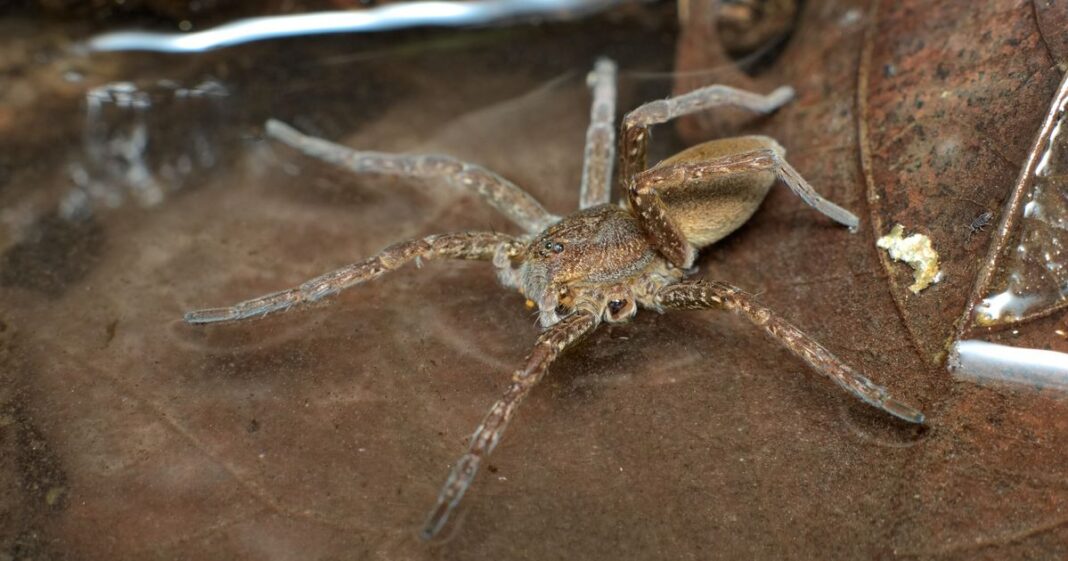

Homeowners are advised to be vigilant for a newly reappearing guest in their homes this fall. The resurgence of a large fish-eating spider, previously believed to be extinct in the UK, is a significant victory for conservationists. These “fairly shy” hunters, growing as large as a human hand, have been sighted in UK residences.
Known as the Fen Raft Spider, this species is among the UK’s largest spiders, boasting a leg span of up to 7cm. Identified by its chocolate-brown body and distinct cream-white stripes, these spiders have the unique ability to walk on water.
Nearly decimated in the UK by 2010 due to habitat loss, the Fen Raft Spider’s population is now rebounding, thanks to conservation efforts by the RSPB in restoring wetlands. Recent reports indicate their reappearance in Norfolk.
Despite their imposing appearance, these spiders are harmless to humans as they lack venom. Their diet primarily consists of small invertebrates like spiders, dragonfly larvae, and pond skaters. However, they have also been observed capturing small vertebrates such as fish and tadpoles.
The semi-aquatic Fen Raft Spiders earned their name from their skill in running across water surfaces to capture prey, resembling a floating raft. Rather than spinning webs, they actively hunt, using their sensitive, hair-covered legs to detect vibrations on the water, enabling them to swiftly catch their prey.
In a collaborative effort involving the RSPB, Suffolk Wildlife Trust, Sussex Wildlife Trust, Natural England, the Broads Authority, and the British Arachnological Society, new sustainable spider populations have been established in the Norfolk Broads. This successful translocation initiative has rescued the critically endangered Fen Raft Spiders from the brink of extinction.
Tim Strudwick, the site manager at RSPB Mid Yare nature reserves, expressed pride in the role their team played in the recovery of the Fen Raft Spider. These spiders play a crucial role in preserving the diverse aquatic ecosystem in the reserves’ grazing ditches, with their impressive size and beauty making them a truly remarkable sight.