
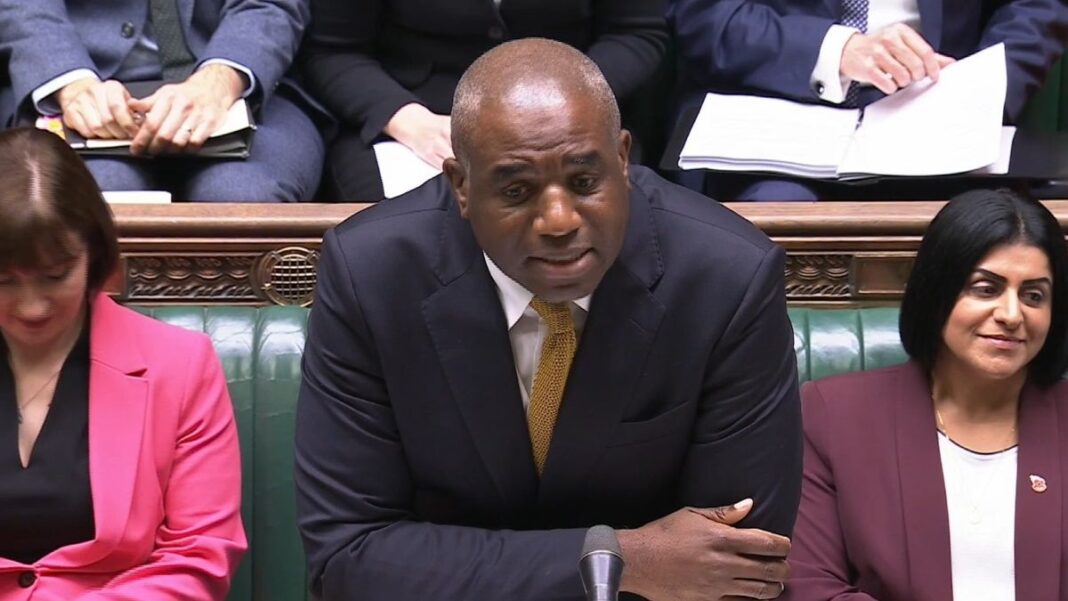

Stuart Lawrence, the brother of Stephen Lawrence who tragically lost his life to a racially motivated attack in 1993 at the age of 18, has commended the historical significance of David Lammy becoming the first Black man to participate in Prime Minister’s Questions. Stuart Lawrence, an advocate for racial equality, expressed his admiration for this pivotal moment, stating, “This is a significant milestone. I witness the hopes and dreams of young Black British individuals being realized right before my eyes.”
David Lammy, who assumed the role of Deputy Prime Minister following Angela Rayner’s resignation in September, lauded the achievements of other notable figures who have previously stood at the despatch box, including veteran MP Diane Abbott, the first Black woman to partake in PMQs, and Kemi Badenoch, the first Black leader of a major UK political party.
Black Members of Parliament celebrated Mr. Lammy’s historic occasion. Calvin Bailey, Labour MP for Leyton and Wanstead, highlighted the importance of this moment amidst ongoing issues of racism, emphasizing the values of the diverse and inclusive Britain they strive to uphold.
Dawn Butler, Labour MP for Brent East and the first Black woman to speak as a minister from the despatch box in 2009, extended her congratulations to David Lammy on his historic feat as the first Black man to engage in Prime Minister’s Questions, emphasizing the significance of representation in politics for future generations.
Adam Jogee, the Labour MP for Newcastle-under-Lyme, emphasized the importance of representation in achieving success and equality, regardless of one’s skin color, in a diverse and thriving United Kingdom. He wished Deputy Prime Minister Lammy success in his role and humorously hoped he wouldn’t ruffle any feathers among his parliamentary colleagues during televised sessions.
These moments of progress serve as powerful symbols of inclusivity and diversity within Parliament, reflecting the society it aims to serve. The continuous push for representation at all levels of governance remains a fundamental aspect of building a more equitable and inclusive political landscape.