

In the realm of government communications, skepticism has long been advised as a prudent approach. This cautious stance stems from the era of strategic messaging and public relations tactics. Despite the prevalence of spin, there is often a kernel of truth in official statements, albeit molded to suit those in power.
However, the current administration under Donald Trump diverges from this norm. Recent incidents have exposed blatant falsehoods propagated by the administration, such as misrepresenting the circumstances surrounding the shooting of an unarmed woman in Minnesota and falsifying an image of a US citizen supposedly arrested for protesting. These actions have eroded trust to the extent that skepticism should now be the default position when considering statements from the White House, pending verification by reputable sources.
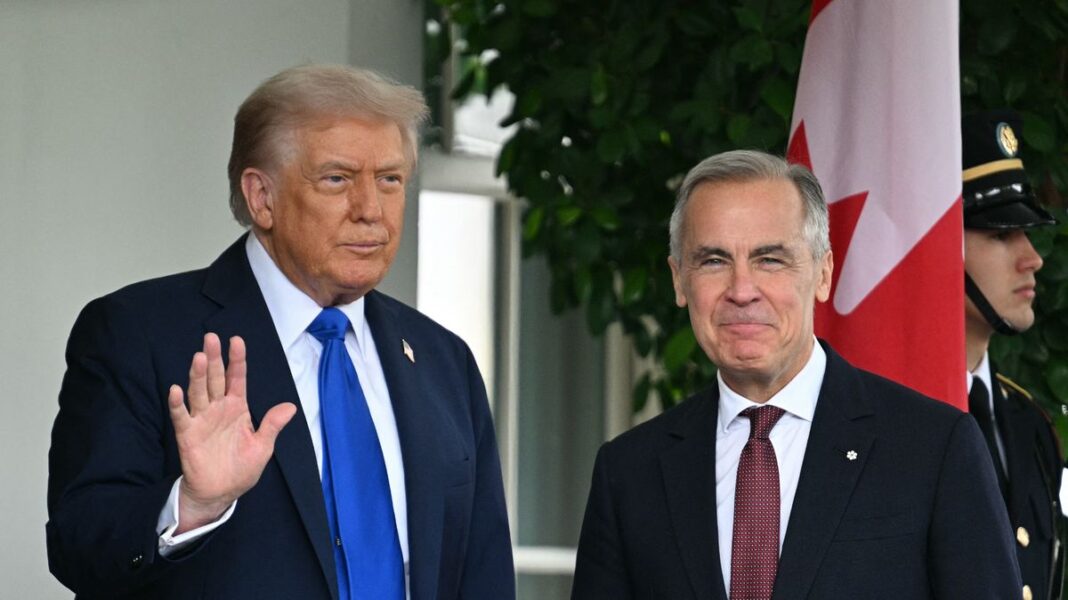
In another development, President Trump issued a stern warning to Canada, threatening a 100% tariff if the country proceeds with a trade agreement with China. The President expressed his disapproval of Canada potentially becoming a conduit for Chinese goods into the United States. This ultimatum follows Canada’s recent trade negotiations with China, which involved tariff reductions on electric vehicles in exchange for lower import taxes on Canadian agricultural products.
Amidst these trade tensions, Sir Rod Stewart voiced condemnation of Trump’s disparaging remarks about troops in Afghanistan. The legendary musician called on UK political figures, including Keir Starmer and Nigel Farage, to demand an apology from Trump for his comments, citing the sacrifices made by soldiers in conflict zones.
Furthermore, the White House faced criticism for a doctored image depicting Trump alongside a penguin in Greenland. The misleading portrayal sparked ridicule due to the absence of penguins in Greenland, leading to a series of nonsensical meme posts from government-affiliated accounts.
In a separate incident, the official White House account shared a manipulated image of a woman being removed from a protest, amplifying emotions in the picture through artificial means. When confronted, the response from the White House reaffirmed their commitment to law enforcement, despite the misrepresentation.
The article also highlights clergy members arrested in Minnesota for protesting against immigration policies, an FBI agent resigning over the handling of an investigation, and controversy surrounding the removal of a slavery exhibit at a historical site in Philadelphia. These events underscore the ongoing conflicts and ethical dilemmas within the current political landscape.
The juxtaposition of factual events and distorted narratives in these incidents reflects the complex and contentious environment surrounding the Trump administration and its interactions with the public and media.