
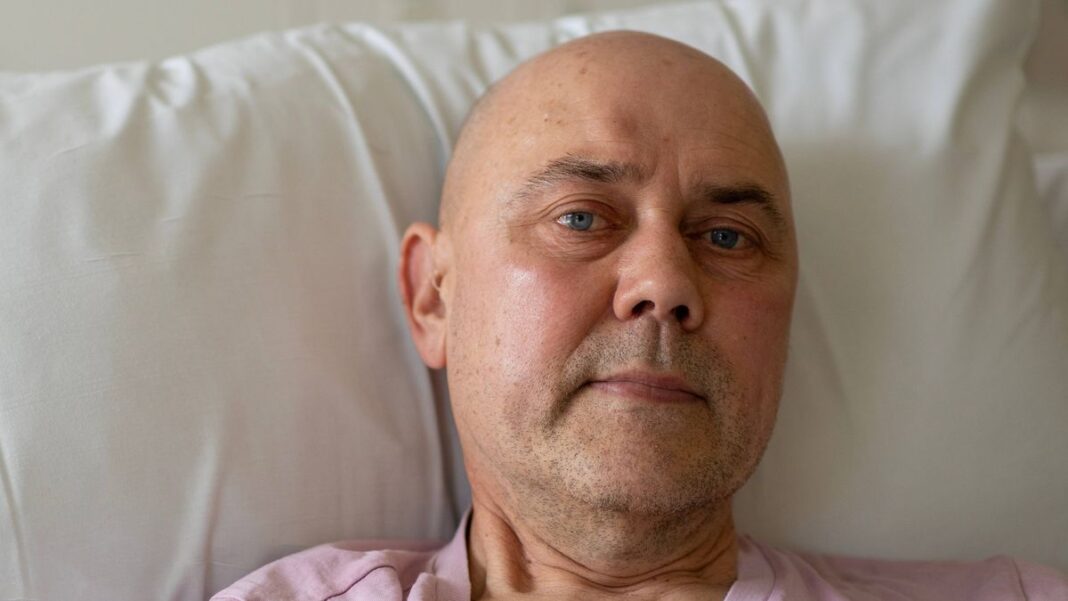

A father recently recounted his remarkable journey of discovering his incurable cancer after a seemingly minor incident led to a significant health revelation. Last May, Paul Angliss, 62, initially disregarded persistent lower back pain as typical wear and tear. Two years earlier, he had encountered similar discomfort, assuming it was a recurring issue.
In August 2024, while vacationing in Japan with his partner Priya Gohil, 52, and their daughter Nancy, 16, Paul struggled up Mount Fuji, battling excruciating pain during the trek. Despite urging his family to proceed without him, his energy depleted every few steps. Determined, he persevered to reach the summit.
Following the trip, Paul resorted to using heat patches on his back. In October 2024, a simple act of stubbing his toe in his bedroom led to a shocking paralysis and spasms in his neck. Unaware of the severity, Paul only sought medical attention days later after struggling to lie down for hours.
Subsequent tests, including an MRI, revealed a rare condition in Paul’s neck. Doctors suspected myeloma, a type of blood cancer affecting bones, as the cause of his unexpected neck fracture. A week later, the diagnosis was confirmed, prompting Paul to express gratitude for the swift escalation of his treatment.
Myeloma, also known as multiple myeloma, is a blood cancer impacting bone marrow and presenting various symptoms. Approximately 6,300 individuals in the UK are affected annually, and while incurable, treatments help manage the condition and extend life expectancy.
Paul began chemotherapy at St Bartholomew’s Hospital in London in November 2024. Following a stem cell transplant in April, he entered the maintenance phase, participating in a drug trial starting in September. Positive progress was evident in subsequent tests, with Paul receiving news of remission on October 13.
Embracing a hopeful outlook, Paul commends advancements in myeloma treatments and advocates for increased awareness of the disease. Reflecting on his journey, he emphasizes the importance of seeking medical attention for unexplained symptoms, urging others not to take their health for granted.