
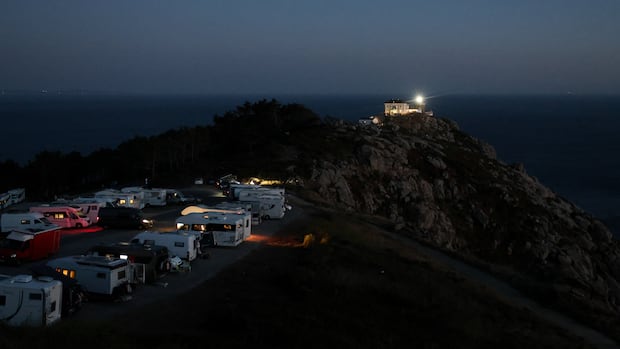

Hundreds of tourists have flocked to Spain to witness the solar eclipse scheduled for Wednesday. However, concerns arise due to the high temperatures and increased wildfire risk in the country. Virginia Barcones, the secretary general for civil protection and emergencies at Spain’s Interior Ministry, emphasized the need to restrict any activities that could potentially ignite fires, given the challenging summer marked by significant forest fires.
A heatwave has engulfed Europe since May, exacerbating Spain’s ongoing wildfire season. The European Forest Fire Information System reports that approximately 603,000 acres of land have been scorched in nearly 400 fires this year. To prevent eclipse visitors from contributing to this statistic, authorities are deploying 35,000 officers to monitor large outdoor gatherings on Wednesday and swiftly handle any potential fire incidents.
Spain stands out as a prime location for viewing Wednesday’s solar eclipse, with the narrow band of totality crossing several countries. Only those within the path of totality can witness the moon completely obscuring the sun, while others, like Canada, will experience a partial eclipse. It is crucial for viewers to protect their eyes with eclipse glasses. This solar event is the first full eclipse visible from mainland Spain in 120 years, drawing significant travel interest.
In anticipation of the large crowds expected for the eclipse, special measures have been implemented across Spain. Valencia saw a surge in lodging searches along the eclipse’s path, reflecting the heightened excitement. Regional governments have designated 660 official viewing sites to accommodate over 440,000 anticipated visitors, with an estimated 1.5 million people expected to travel to these locations. Authorities caution against activities that could pose a fire risk, urging tourists to adhere to safety guidelines.
Despite the surrounding challenges of a heatwave and wildfires, eclipse enthusiasts remain undeterred. The eclipse’s unique spectacle, including the temporary drop in temperature and visibility of stars during totality, captivates viewers worldwide. The economic impact study predicts that the eclipse will significantly boost Spain’s economy, further highlighting the event’s significance.
As Spain braces for the solar eclipse, concerns over wildfire risks persist. Dry conditions and high temperatures are expected on the day of the eclipse, raising the forest fire index to critical levels. With a history of human-caused wildfires, the influx of tourists in rural areas poses additional ignition risks. Authorities stress the importance of vigilance and adherence to safety measures to prevent fire incidents.
Looking ahead, Spain anticipates hosting two more solar eclipses in the coming years, fueling prospects for continued astrotourism. The upcoming celestial events offer unique opportunities to witness natural phenomena and explore diverse regions globally, fostering a deeper appreciation for the interconnectedness of nature and climate change impacts.