
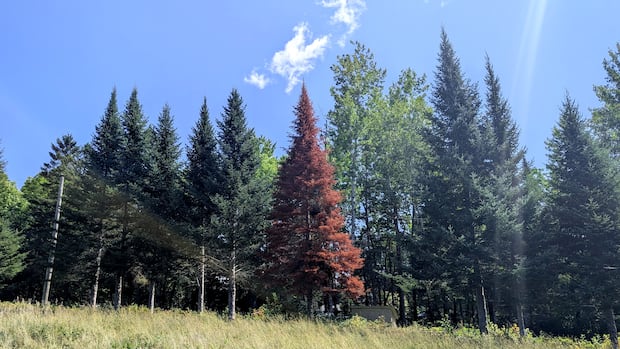

Balsam fir trees in New Brunswick are experiencing a concerning phenomenon of turning red and dying due to the severe drought that occurred last summer. This situation is raising alarms about the future survival of these iconic provincial trees, as observed by University of New Brunswick forestry researcher Prof. Anthony Taylor. Taylor has witnessed firsthand the detrimental effects on the evergreen trees, commonly used as Christmas trees, as they gradually transition to a red, dried-out state leading to their demise.
According to Prof. Taylor, the current pattern aligns with past occurrences following hot and dry summers. He emphasizes that the warm and dry weather conditions negatively impact the growth ability of balsam fir trees. Taylor’s extensive research on climate change’s impact on New Brunswick’s forests has revealed similar die-offs of balsam fir trees after unusually hot and dry summers in 1986 and 2018.
The trees, in response to drought conditions, halt the photosynthesis process prematurely, hindering their growth. This interruption prevents them from producing the necessary energy reserves for essential metabolic processes and defense mechanisms. Taylor explains that this puts the trees at a significant disadvantage, making them more susceptible to stress from insects or pathogens, increasing the likelihood of die-offs.
Moreover, balsam fir trees have shallow roots, complicating their ability to access water during dry periods. Peter McKeil, a woodlot owner in New Brunswick, noticed the damage to his balsam firs in June, with the trees progressively turning red from the lower branches upwards. McKeil estimates a loss of approximately 100 trees so far and has adjusted his harvesting practices to salvage value from the remaining fir before further losses occur.
McKeil expresses concerns about the future of the balsam fir species, particularly in southern New Brunswick, attributing the worsening climate change as a contributing factor to their decline. He believes that with the ongoing environmental changes, the species may face an uncertain future and could potentially shift towards more northern regions.
Prof. Taylor highlights the urgency for climate action, emphasizing the visible impact of climate change on New Brunswick’s balsam fir trees. He views the red trees as a tangible indication of the environmental challenges posed by a changing climate. Taylor hopes that his research will prompt necessary actions to address climate change by reducing reliance on fossil fuels and implementing sustainable forest management practices to mitigate further ecological disruptions.