
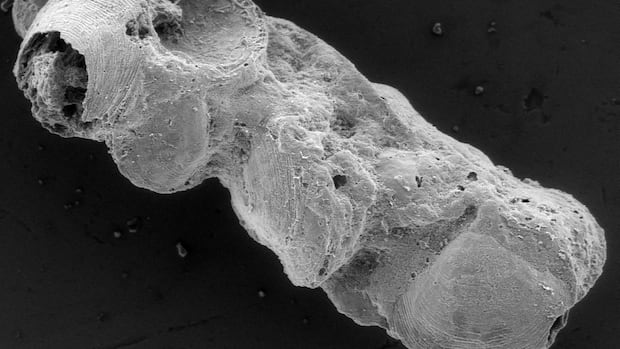

Long before the time of dinosaurs, there was a surge in biodiversity leading to the emergence of early ancestors of present-day animals, accompanied by an increase in excrement. A recent study sheds light on how the examination of coprolites, fossilized feces, aids in understanding ancient Earth ecosystems, nutrient cycles, and animal interactions.
The research, detailed in the journal Trends in Evolution & Ecology, delved into the analysis of fecal fossils dating back to the Cambrian period, approximately 540 million years ago. By studying feces remnants from primitive worms, invertebrates, and mollusk-like creatures, scientists inferred that fecal matter played a crucial role in enhancing habitability and nutrient availability in deep water environments during that era, long before the existence of dinosaurs.
The abundance of feces discovered in the Cambrian period holds significant implications for comprehending the origins of modern ocean ecosystems, according to the study’s findings. Julien Kimmig, a co-author of the paper and head of the paleontology division at the Karlsruhe Natural History Museum in Germany, emphasized the importance of recognizing the impact of fecal matter in sustaining past and present marine ecosystems.
The examination of coprolites by Kimmig and Russell Bicknell revealed insights into various ancient organisms, including burrowing worms, arthropods, brachiopods, and hyoliths. These fecal fossils, ranging from microscopic to the size of rabbit droppings and eventually becoming visible to the naked eye, provide clues not only about evolutionary relationships and dietary habits but also about the ecological dynamics of Earth during the Cambrian Radiation, a period marked by the sudden appearance of modern animal groups in the fossil record.
Kimmig underscored the relevance of paleontology in understanding ecological changes over time, emphasizing the importance of studying past ecosystems to anticipate and model future environmental scenarios. By exploring coprolites, researchers can gain valuable insights into the intricate interactions within ancient ecosystems and how they adapted to environmental shifts, offering valuable lessons for addressing contemporary ecological challenges.
The study’s focus on the Cambrian period sheds light on a pivotal moment in Earth’s history, where the rise of diverse animal groups laid the foundation for modern oceanic ecosystems. By examining the expansion of feces during the Cambrian Radiation compared to preceding periods, researchers aim to decode the complex interplay between organisms, nutrients, and energy flows that shaped ancient ecosystems and continue to influence present and future biodiversity.
In closing, the study underscores the importance of coprolites in unraveling the mysteries of ancient life forms and ecosystems, providing a unique perspective on how organisms interacted with their environments and each other. By delving into the world of fossilized feces, researchers like Karen Chin and Julien Kimmig are uncovering invaluable insights that could reshape our understanding of Earth’s history and inform future environmental conservation efforts.