
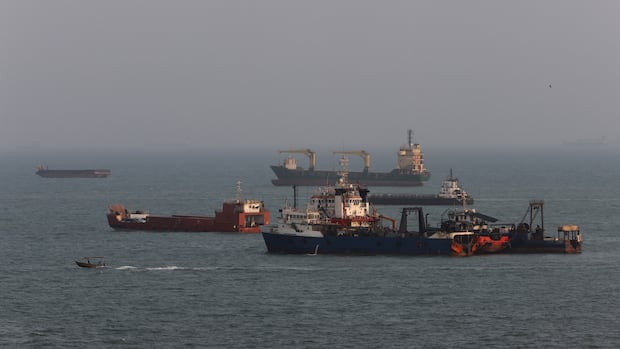

Five high-ranking Iranian officials are set to receive sanctions for their involvement in activities within the Strait of Hormuz that disrupt international peace, announced Canada’s foreign affairs minister. Emphasizing the critical role of the Strait of Hormuz in global trade and energy security, Foreign Affairs Minister Anita Anand stated that the sanctions target individuals who pose a threat to these essential principles. Canada has urged Iran to de-escalate tensions and uphold international navigation rights.
The sanctioned individuals, including members of the Islamic Revolutionary Guard Corps (IRGC), have been identified for their actions that jeopardize a vital international waterway, as per a press release from Global Affairs Canada. The officials facing sanctions are Ali Abdollahi, Lt.-Col. Ebrahim Zolfaghari, Ebrahim Azizi, Shahram Irani, and Hamid Hosseini.
Canada’s imposition of sanctions brings the total number of individuals and entities sanctioned within Iran’s security, intelligence, and economic sectors to 232 and 260, respectively, according to Global Affairs Canada. The sanctions are part of efforts to pressure for an end to the ongoing conflict involving the U.S., Israel, and Iran, following an unresolved peace agreement established in June.
Since the conflict erupted in February, marked by a joint U.S.-Israeli attack on Iran, U.S. President Donald Trump has vacillated between threats of escalation and claims of impending peace deals. Iran has sought to exert influence by controlling the Strait of Hormuz, a crucial waterway for global oil and liquefied natural gas transport. Trump has called on allies to secure the important oil shipping route, with Canada and other nations urging Iran to cease attempts to block the strait and offering assistance in its reopening.
The U.S. military has expressed readiness to maintain a naval presence in the region to enforce its blockade of Iran, with Secretary of War Pete Hegseth affirming the navy’s capability to sustain the blockade indefinitely. Pressure mounts on Trump to resolve the conflict as high fuel prices impact his approval ratings ahead of the U.S. midterm elections, with the global economy facing challenges as global oil supply is projected to decline this year.