
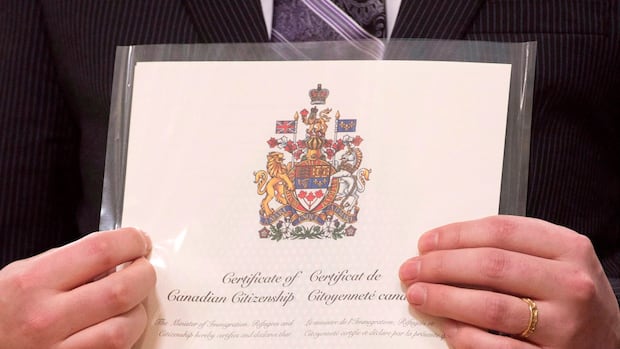

Applications for Canadian citizenship certificates have seen a significant increase globally, particularly driven by a surge in submissions from the United States, as per findings by CBC News. The adoption of the “Lost Canadian” legislation by Parliament late last year led to a nearly 50% rise in the number of individuals receiving certificates from April 1 to May 31, according to recent CBC data.
The enactment of Bill C-3 allows individuals to acquire citizenship if they can demonstrate descent from a Canadian ancestor, even if that ancestor emigrated from the country several generations ago. This legislation was implemented after the courts deemed the previous restriction of citizenship to the first generation born outside Canada too limiting.
From mid-December to May 31, around 6,100 citizenship certificates were granted to eligible individuals by Immigration, Refugees, and Citizenship Canada (IRCC) following the implementation of Bill C-3. This marks a notable increase from the 4,075 certificates issued between mid-December and March 31. Additionally, 17,390 individuals have obtained certificates due to having a Canadian parent, whereas before the bill’s enactment, citizenship required having a Canadian parent for those born outside Canada.
The newly recognized Canadian citizens, totaling 23,490, can now apply for Canadian passports and reside or work in Canada. However, Elections Canada stipulates that they cannot participate in federal elections unless they have resided in Canada at some point in their lives.
Americans constitute almost half of the individuals recognized between mid-December and the end of May. Specifically, 3,110 Americans qualified for Canadian citizenship certificates under Bill C-3, with an additional 8,125 Americans granted certificates due to having a Canadian-born parent.
Nonetheless, the surge in citizenship certificate applications awaiting decisions has been drastic. In April, approximately 56,000 applications were pending processing, escalating to 70,400 in May. Presently, the IRCC website indicates 121,800 individuals awaiting a decision, which could encompass applications related to citizenship recognition under Bill C-3 or routine replacement requests for lost or stolen certificates.
Simultaneously, the estimated wait time for a decision has extended from 12 months in May to 25 months as of August 10. The potential number of individuals qualifying for Canadian citizenship under Bill C-3 varies significantly, with some estimates suggesting that up to 115,000 people could be impacted by the legislative change.
Despite expectations of moderate application volumes post-Bill C-3 implementation, the IRCC has witnessed a substantial influx of applications. The department has taken proactive measures to manage the demand efficiently while maintaining program integrity. The requirements for documentation remain unchanged, although efforts have been made to enhance clarity on the IRCC website and other public information platforms.
Furthermore, Canadian archivists have observed a notable surge in requests for genealogical records essential for proving lineage to obtain a Canadian citizenship certificate under Bill C-3. This increased demand has placed strain on archivists, with some institutions reporting a surge of 100 to 300% in requests, often involving documents dating back centuries.
The Association of Canadian Archivists emphasizes the need for additional funding to cope with the escalating demand for records necessitated by Bill C-3. The association also highlights the evolving list of accepted documents by the IRCC, posing challenges for archivists in verifying ancestry documentation accurately.
Concerns have arisen regarding the suspension of approximately 100 citizenship certificates by IRCC due to issues with submitted documents, potentially leading to additional requests for genealogical records. The IRCC has resolved 83 suspensions and issued procedural fairness letters to address the remaining cases. Failure to provide acceptable proof may result in the revocation of citizenship certificates, prompting inquiries from affected individuals and opposition voices seeking clarification from the Immigration Minister.