
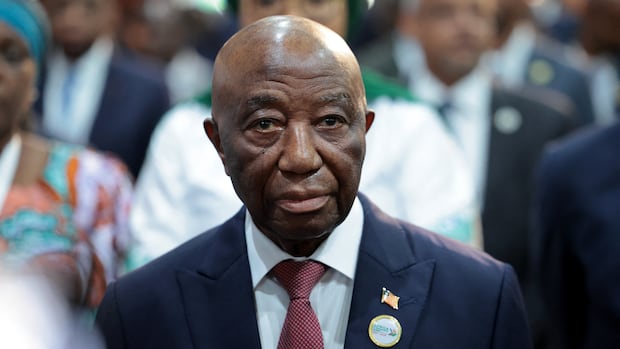

Liberia has officially agreed to take in a maximum of 1,200 deportees from the U.S. over the next 12 months. The initial group of 20 individuals is anticipated to arrive on Thursday, as announced by the government. These deportees will consist of people from African and Western Hemisphere nations who have received medical clearance for travel. Specific details regarding their nationalities were not disclosed, as the U.S. State Department typically refrains from divulging such information.
Historically, the U.S. has upheld the principle of non-refoulement in its immigration laws and international agreements, which prohibits the return of individuals to countries where their human rights may be at risk due to factors like race, religion, or nationality. However, since the beginning of President Donald Trump’s tenure in January 2025, the administration has engaged in agreements with various African nations and others globally to deport individuals who cannot be sent back to their home countries. These deals have faced criticism for their lack of transparency and limited notice provided to deportees.
Immigration attorneys have pointed out that third-country deportations serve as a legal workaround for the Trump administration, often leading migrants to unfamiliar destinations and leaving them with limited options to return to their countries of origin. Liberian President Joseph Boakai was part of a group of West African leaders who met with President Trump last year, during which Trump encouraged them to accept third-country deportees.
Liberia has assured that the deportees will be treated as guests, allowing them the freedom to depart at their discretion and apply for asylum within the country. The government emphasized that the agreement with Washington was not based on a quid pro quo arrangement, and Monrovia was not seeking compensation for accommodating the deportees.
In a report released in February, Senate Democrats raised concerns about the exploitative nature of such agreements, highlighting the financial costs incurred by the U.S. through deals with countries like Equatorial Guinea, Rwanda, El Salvador, Eswatini, and Palau. The senators criticized the use of deportation as a bargaining tool, citing secretive payments and coercion tactics employed to pressure countries into accepting deportees.
Several other African nations, including the Democratic Republic of Congo, Central African Republic, Cameroon, Ghana, and Sierra Leone, have also accepted U.S. third-country deportees. These deportations form part of the broader efforts by the Trump administration to reduce the foreign-born population in the U.S., which includes urging unauthorized individuals to self-deport and revoking visas from foreign nationals. Recent court decisions have allowed the administration to terminate legal protections for various immigrant groups, such as Ethiopians, South Sudanese, Myanmarese, and Somalis, residing in the United States.