
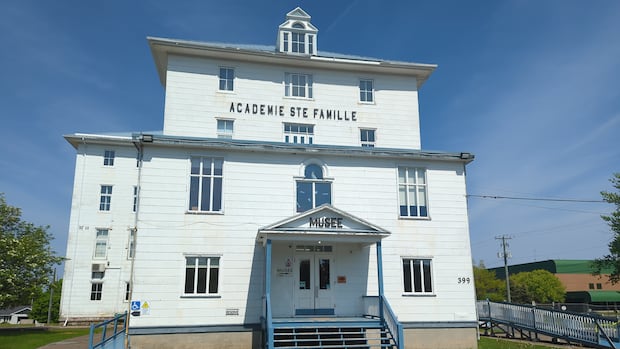

New Brunswick boasts over 100 museums and heritage sites, and as part of our Museum Road Trip series, CBC News is shining a spotlight on eight historical gems in small towns.
Once an integral part of life in Tracadie, northeastern New Brunswick, the Religieuses Hospitalières de Saint-Joseph order was deeply involved in caring for the sick, running an orphanage, and educating children. Although no longer active in the town, their legacy lives on at the Musée Historique de Tracadie.
Initially focusing on operating a lazaretto for lepers, the nuns’ mission evolved over time. Leprosy, a bacterial infection affecting various body parts, was first identified in Tracadie in 1828, likely introduced by immigrants from Norway.
The lazaretto, initially established in 1849, underwent upgrades to enhance care for lepers, eventually catering to patients from across Canada. However, this move faced resistance from the community due to the town’s tarnished reputation.
In 1943, Dr. Guy Henry Faget’s discovery of the effectiveness of promin in treating leprosy marked a turning point. This breakthrough led to the closure of the lazaretto in 1965 as lepers could now be cured.
Beyond leprosy care, the sisters also provided general healthcare services, operating a francophone hospital in 1896, a pioneering move for New Brunswick at the time. The museum showcases historical medical equipment, capturing the evolution of healthcare practices.
The nuns recognized the lack of education in Tracadie and established day and boarding schools to address this gap. The boarding school attracted students from across francophone New Brunswick and Quebec, offering a diverse curriculum that went beyond traditional subjects.
While the Religieuses Hospitalières de Saint-Joseph order remains active in other communities, they departed from Tracadie in 2025, leaving behind a rich legacy of healthcare and education.