

On the Gaza coastline, resembling a vacation spot rather than a war zone, Palestinians enjoy the sun amid a conflict that has extended into its third year. Despite discussions of peace talks and withdrawals, few believe the war has truly ended.
Israeli airstrikes target Hamas militants in Gaza almost daily, despite intermittent truces. Israeli forces have been advancing westward, confining two million Palestinians to a shrinking area near the Mediterranean Sea.
Following the Gaza peace agreement last October, Israel agreed to withdraw its troops to the “yellow line,” representing less than 50% of the territory. However, Israel currently controls over 60%, citing operational security needs.
Israeli Prime Minister Benjamin Netanyahu has directed the IDF to expand control to 70%. Netanyahu rejected a U.S. plan to phase out Israeli military and Hamas control, insisting on Hamas disarmament before any withdrawal.
Israeli forces have been gradually moving the yellow line, displacing Palestinians and causing profound impacts on civilians. Satellite images and eyewitness accounts confirm the military’s advancement.
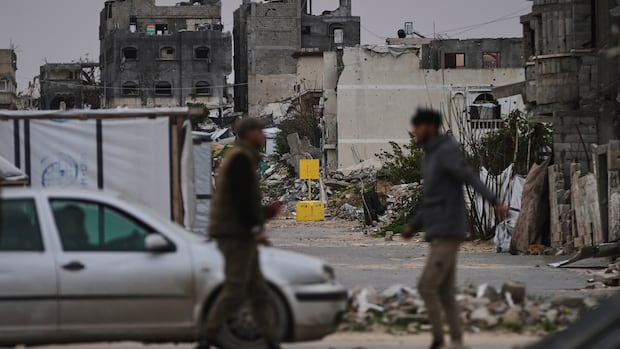
Palestinians wake up to find the yellow markers closer to their homes, signaling impending displacement. Many neighborhoods in Gaza have been destroyed since the conflict began, with homes being systematically flattened by Israeli forces.
Israel claims the movement of the yellow line aligns with the ceasefire deal and aims to enhance security. The IDF’s defensive measures include constructing barriers and fortified compounds along or behind the yellow line.
Extremist Israeli groups, including Nachala, have advocated for annexing Gaza, with some cabinet members supporting the idea. Netanyahu’s party faces pressure to annex parts of Gaza, but the extent of these plans remains uncertain.
As Palestinians face uncertainty and displacement, there are fears of being pushed into the sea by ongoing territorial shifts and military actions.