
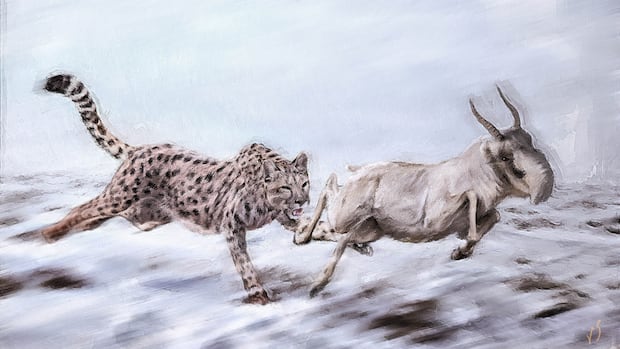

A recent discovery in northern Yukon has challenged previous assumptions about the identity of bones found in the Bluefish Caves and a local mine site. Initially believed to belong to an ice-age puma or cougar, DNA analysis conducted by the University of California revealed a surprising twist. The analysis, carried out by Molly Cassatt-Johnstone, a lab technician fresh out of her undergrad studies, unveiled that the bones were not from pumas as expected but rather from cheetahs.
Grant Zazula, a Yukon paleontologist, vividly recalls his astonishment upon receiving the revelation that the bones were not cougars but cheetahs. This groundbreaking revelation marks a significant milestone in paleontological research, as delving into ancient DNA was once considered akin to science fiction but has now become a routine practice.
Cassatt-Johnstone’s groundbreaking discovery of a Yukon Miracinonyx, also known as the extinct American cheetah, has led to her authoring a paper in Current Biology. The study sheds new light on the ice-age cat’s dietary habits and geographical range, presenting an intriguing detective story for researchers.
Contrary to previous beliefs that American cheetahs primarily preyed on pronghorns in grassy plains, researchers were puzzled to find evidence of these creatures in the Arctic tundra. The study, which involved collaborators from Canada and the U.S., employed stable isotope analysis to unravel the mystery of how Miracinonyx thrived in this challenging environment.
The analysis revealed that Yukon cheetahs had a peculiar diet, predominantly consisting of fish, a behavior uncommon among both past and present-day felines. This unexpected dietary preference has sparked discussions among researchers about the ecological dynamics that may have influenced the cheetahs’ survival strategy in the region.
Julie Meachen, a paleontologist specializing in mammalian carnivores, expressed astonishment at the unique behavior exhibited by Yukon cheetahs compared to their counterparts in other regions. The study’s extensive DNA analysis also unveiled genetic similarities between Miracinonyx and North American pumas, shedding light on the population dynamics and potential factors contributing to their extinction.
In light of these findings, Zazula advocates for renaming the northern population of these felines from ‘American Cheetah’ to ‘Yukon Cheetah.’ This discovery underscores the ever-evolving nature of paleontological research, demonstrating how each new finding can unveil a fresh chapter in the history of ancient species.