
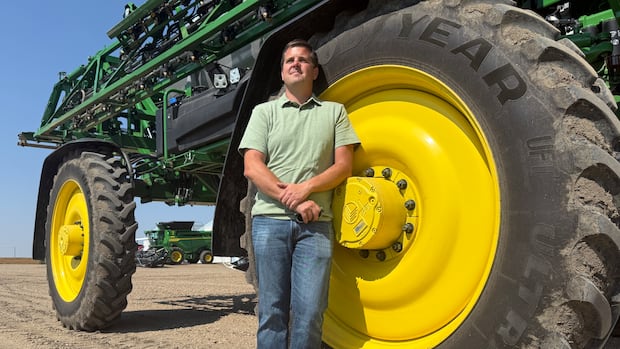

In Coleville, Saskatchewan, Dean Roberts observed a large grey drone flying over his expansive 4,000-hectare farm, showcasing the DJI T100, the largest spray drone available in Canada. With a 100-litre tank capable of carrying pesticides for crop spraying, the federal government recently approved this technology. During the demonstration, the drone’s tank was filled with water as it navigated the fields. Roberts mentioned the potential benefits of using drones for applying fungicides in wet conditions that ground rigs cannot access easily.
Highlighting the technological advancements in Prairie farming, Roberts emphasized the need for Canada to catch up with other countries like the U.S., China, Brazil, Japan, and Australia in adopting drone spraying technology. He pointed out that regulatory delays have hindered the implementation of such innovations in Canada.
Experts have identified red tape, infrastructure limitations, and labor shortages as key challenges affecting Canada’s agricultural export growth compared to other nations. Despite Canada exporting about $100 billion worth of agri-food products annually, its growth rate is lagging behind global competitors.
Evan Fraser from the University of Guelph’s Arrell Food Institute highlighted the need for Canada to streamline its regulatory framework to facilitate the adoption of new agricultural technologies. Roberts echoed the sentiment, emphasizing the importance of timely approvals for crop protection products.
Roberts also discussed the infrastructure challenges faced by farmers in transporting crops to global markets, particularly the reliance on railways for export. Delays in rail transportation can lead to bottlenecks at grain elevators, impacting the timely delivery of crops to ports.
In addressing labor shortages and the complexity of modern farming equipment, Roberts and Evan Shout from Maverick Ag emphasized the need for skilled workers in the agriculture sector. They stressed the importance of farmer representation in policy discussions to overcome industry challenges effectively.
Looking ahead, Canada aims to enhance its food security strategy by boosting domestic food production while also increasing export capacity. However, experts like Jennifer Clapp advocate for a balanced approach, focusing on sustainable agriculture practices and mindful export strategies to avoid negative impacts on global food systems.
As climate change shifts agricultural landscapes, Canada is poised to become a significant agricultural player. Fraser emphasized the country’s potential to increase food production, considering the changing global dynamics. Roberts expressed confidence in Canada’s ability to contribute significantly to global food supply with its abundant arable land and favorable farming conditions.