
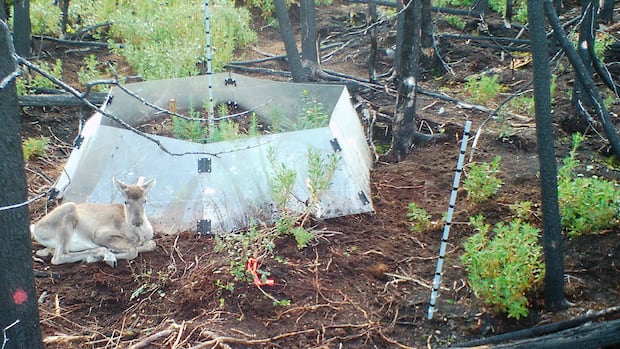


Lucas Brehaut had high hopes for his research efforts but found unexpected obstacles in the form of curious wildlife in Newfoundland’s wilderness.
As a wildfire research scientist with the Canadian Forest Service, Brehaut is investigating forest regeneration in Atlantic Canada post wildfires, with a particular focus on the impact of climate change-induced temperature rises.
Following a forest fire near Grand Falls-Windsor, N.L., in 2022, Brehaut embarked on a study to observe forest regrowth patterns in a warming environment, using 19 open-top chambers (OTCs) to simulate increased temperatures and monitor seedlings over a five-year study period.
-
The only known woolly dog pelt has returned to Canada. It’s a ‘powerful moment’ for Indigenous communities
-
These tiny endangered raccoons make their own toys out of trash
However, Brehaut encountered unexpected challenges in September 2023 when various wildlife species, including caribou, moose, black bears, wolves, rabbits, and owls, interfered with his research equipment, causing damage and disruptions.
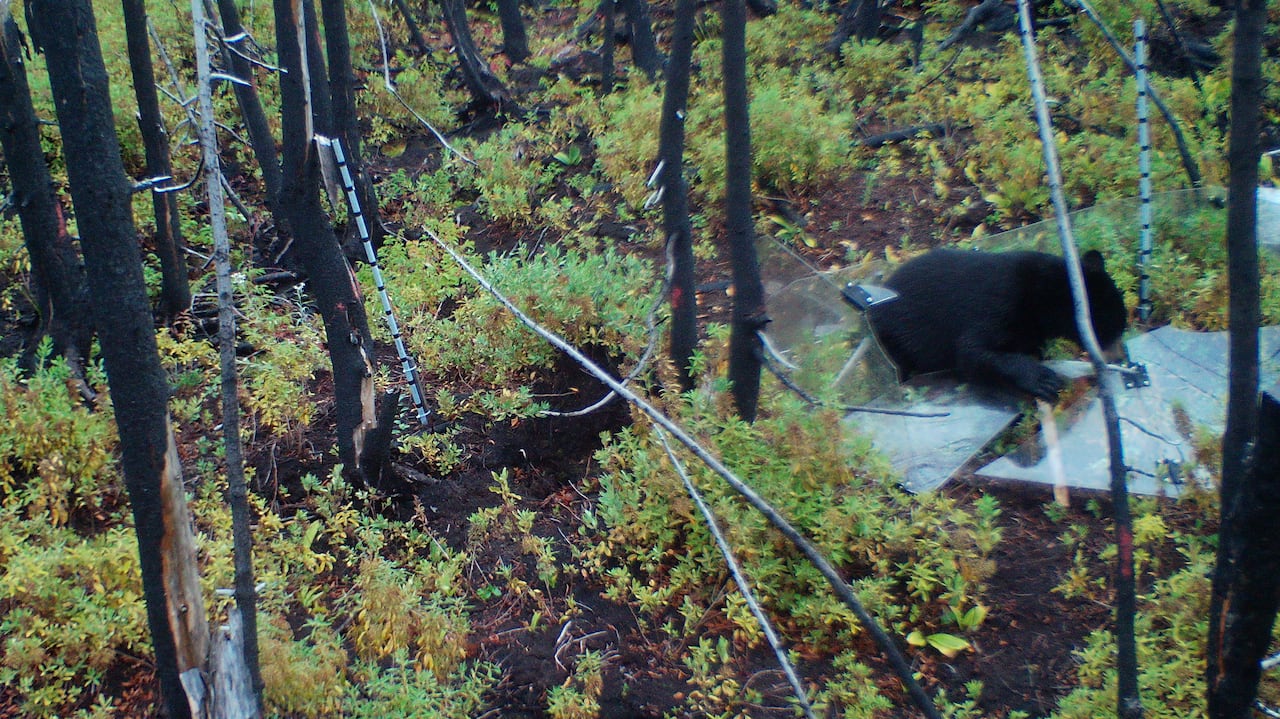
Despite the setbacks, Brehaut remains understanding of the animals’ behavior, acknowledging that they are merely exploring their habitat, even if it disrupts his research outcomes.
Wildlife biologist Kaitlyn Gaynor from the University of British Columbia explains that animals, like bears, are naturally curious about new objects in their environment, often investigating them for potential resources or threats.
- <a class="cardWrapper-u5T0r cardWrapper-_487P noPaddingCardWrapper" data-feature-instance="similar-link" data-feature-name="link" data-contentid="