
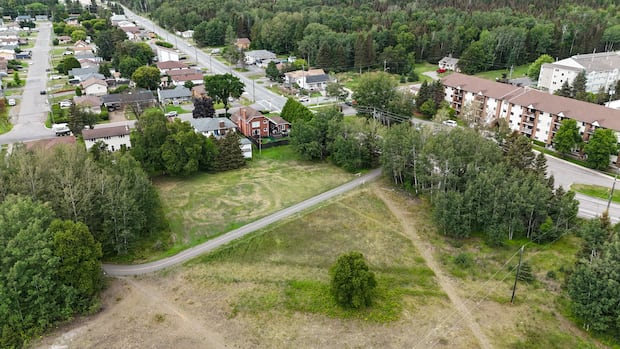

Lori Santink expressed her disappointment but lack of surprise over the city council’s decision to rezone two empty properties for new housing projects in Thunder Bay, Ontario. The properties, including 791 Arundel St., were sold to Terralux General Contractors and Development Limited as surplus land to address the city’s shortage of about 1,000 housing units.
Pending approvals, the city could see the construction of over 900 new units, with 360 units in two apartment buildings at 791 Arundel St., 150 units in one apartment building at 144 Fanshaw St., and 400 units in two apartment buildings at 300 Tokio St. While the proposals for Arundel and Fanshaw streets required rezoning, the Tokio Street property was already appropriately zoned.
Santink criticized the Arundel Street proposal, citing conflicts with the city’s Net-Zero Strategy and Climate Adaptation Strategy. She, along with the grassroots group TBay Greenspace Preservation, gathered over 2,600 signatures in a petition against the development and organized a rally with over 100 participants outside city hall.
The Ontario government’s Bill 60 limits residents from appealing municipal council decisions through the Ontario Land Tribunal, removing an avenue for challenging rezoning decisions. Santink called for legal expertise in environmental law to potentially pursue a judicial review of the decisions.
Devon McCloskey, Thunder Bay’s manager of planning services, mentioned that the developer is making adjustments to address public concerns before beginning construction pending applications. The projects are part of the city’s Smart Growth Action Plan to offer diverse housing options and utilize underutilized public lands sustainably.
Councillor Andrew Foulds, representing the area of 791 Arundel St., opposed the rezoning but acknowledged the unprecedented level of public engagement. Leia Minaker, an associate professor at the University of Waterloo, highlighted the challenges of achieving consensus on housing developments amid differing community opinions and concerns.
Minaker emphasized the need for transparent information on the potential impacts of developments, especially in northern cities like Thunder Bay facing growth challenges. Santink emphasized the importance of ongoing communication from the city to keep the public informed about the developments.