
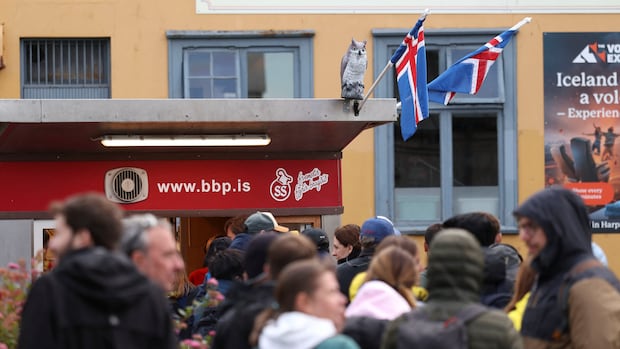

Icelanders have voted against joining the European Union, according to the results of a recent referendum. The government’s proposal to resume discussions on EU membership was rejected, with concerns over the importance of Iceland’s fishing waters playing a significant role in the decision.
In a closely watched referendum, 52.8% of votes opposed the government’s initiative to engage in negotiations with the EU, while 47.2% supported it. The voter turnout was high, with 82.5% of eligible voters participating in the referendum. Notably, only the central Reykjavik constituencies showed a majority in favor of the proposal, while rural areas and Reykjavik suburbs voted against it.
The government positioned EU membership as a means to shield against trade disputes and Arctic tensions. Prime Minister Kristrun Frostadottir emphasized the referendum as a crucial moment, stating that a “no” vote would settle the matter for the duration of her government’s term.
The debate over EU membership has been ongoing for years, with some EU officials hoping Iceland’s potential accession could enhance the bloc’s standing and strategic position, particularly in light of Arctic security concerns. The issue of security, especially amid doubts about U.S. commitment to NATO by President Donald Trump, was also a point of discussion within Iceland.
For many Icelanders, the focus on fishing industry outweighed security considerations. The fishing sector is a vital component of Iceland’s economy, contributing significantly to the GDP and export revenue.
Financial aspects were also central to the referendum discussions, with concerns about high inflation and interest rates in Iceland. Proponents of EU membership argued that adopting the euro could offer economic relief, potentially leading to a more stable economy.
Opposition leader Gudrun Hafsteinsdottir, who led the campaign against EU membership, downplayed the economic benefits, emphasizing the need for Icelandic politicians to address internal challenges. Some voters expressed confidence in Iceland’s ability to thrive independently.
Regarding fishing rights, Icelandic officials have cited EU rules that could allow Iceland to maintain control over its waters based on historical fishing practices. However, some skepticism remains, with concerns that EU promises of flexibility may not be long-lasting.