
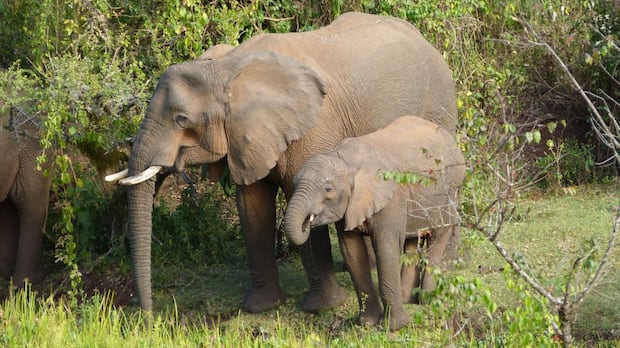

In an interview with scientist Elodie Freymann, intriguing stories emerged about African elephants in Kenya’s Mount Elgon region. These tales include a sickly elephant chewing on a tree bark commonly used in traditional medicine and a mother elephant blending a plant with medicinal properties into her milk for her offspring.
Freymann, a researcher exploring self-medication in animals, expressed little surprise at the intelligence and complexity of elephants and their societies. The recent study she co-authored, published in the journal Nature, reveals insights from local knowledge, highlighting several dozen medicinal plants elephants in Mount Elgon use.
The study underscores the sophistication of elephants and emphasizes the necessity of safeguarding the biodiversity crucial to their well-being. Nevertheless, researchers caution that further investigation is required to definitively confirm whether the elephants are engaging in self-medication.
Utilizing information from eight members of the Sabaot community, who have extensive experience with the elephants, the research sheds light on specific behaviors observed in the elephants. While some describe elephants seeking out particular plants when unwell, others witness mother elephants feeding known medicinal plants to their young.
Out of the 35 plants mentioned in the interviews, 34 have traditional medicinal uses, with eight of the most frequently cited plants recognized for their pharmacological properties in scientific literature. Freymann stresses the importance of valuing local insights and involving them in scientific endeavors.
Although the study serves as a promising foundation for further exploration, elephant ecologist Chase LaDue, not involved in the research, cautions about drawing premature conclusions regarding intentional self-medication by elephants. He points out the limits of anecdotal evidence and the need for comprehensive health data and observations to validate such claims.
While acknowledging the potential limitations of anecdotal evidence, Freymann points out the bitter and toxic nature of the compounds found in medicinal plants consumed by elephants. She underscores the need for more in-depth research, including analyzing footage of elephants consuming these plants, to advance understanding in this area.
If substantiated, the elephants’ behavior would align them with other animals, such as chimpanzees, great apes, insects, and birds, known to exhibit self-medication tendencies. Freymann emphasizes the importance of preserving biodiversity not only for sustaining animal populations but also for safeguarding their access to essential medicinal resources in a changing environment.