
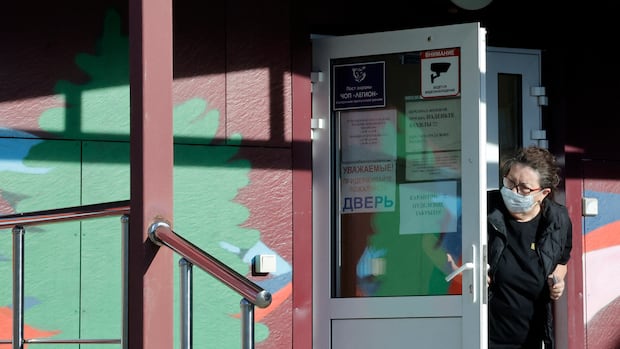

Russia’s health authority clarified on Thursday that rumors of a second individual falling ill after the demise of a worker at a plague research facility in Siberia were untrue. In a statement released through Russian news outlets, the regulator refuted what it labeled as “misinformation circulating on social platforms regarding a subsequent illness.” The authority confirmed conducting screenings on all contacts of the deceased woman, asserting, “No health concerns linked to an infectious ailment were identified, and close to 5,000 lab tests showed no presence of harmful pathogens.”
The Russian officials disclosed that 28-year-old Daria Shipilova passed away last Friday due to pneumonia of an unknown origin. Shipilova worked at the Irkutsk Anti-Plague Research Institute of Siberia and the Far East in Shelekhov, prompting the implementation of precautionary anti-epidemic measures. Rospotrebnadzor, the Russian health watchdog, stated that she succumbed to an unspecified type of pneumonia and no relevant pathogens were found in those in contact with her. Authorities mentioned that Shipilova had been vaccinated, rendering her immune to the dangerous infections she was exposed to.
Initially rating the risk to the public as low, the World Health Organization (WHO) expressed the challenge in assessing the full risk due to insufficient information from Russian authorities. WHO Director-General Tedros Adhanom Ghebreyesus extended support to Russia and urged verification of media reports hinting at a second employee with unexplained pneumonia. Health Canada affirmed monitoring the situation without perceiving any current risk to Canada, citing the last human plague case in the country dating back to 1939.
U.S. Centers for Disease Control and Prevention (CDC) Director Erica Schwartz downplayed the risk to the U.S. from an unconfirmed pneumonic plague case in Siberia as extremely low. The CDC is prepared to monitor and screen travelers, with a port health station at New York’s John F. Kennedy International Airport catering to individuals arriving from that region. The U.S. Department of Health and Human Services is yet to comment on potential screening measures. Approximately 200 individuals from Siberia visit the U.S. annually, with direct flights suspended since the onset of the Ukraine conflict in 2022.