
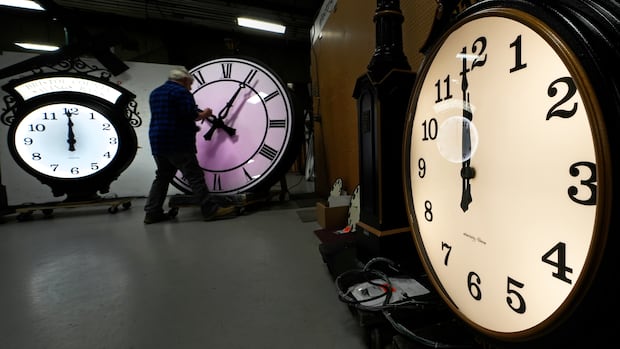

The use of “leap seconds” to maintain synchronization between clocks and Earth’s rotation has been a practice for over five decades. Recently, a decision by an international timekeeping body in France has been made to eliminate leap seconds, allowing the misalignment to gradually accumulate over centuries or even millennia.
The precise atomic time, established in the 1950s by tracking atomic vibrations, differs slightly from solar time based on the sun’s position relative to Earth due to the planet’s slowing rotation. The introduction of leap seconds in 1972 aimed to address this discrepancy by initially adding ten seconds.
The International Earth Rotation and Reference Systems Service has since monitored the gap between solar and atomic time to determine when additional seconds are necessary. Leap seconds have been inserted 27 times, with the most recent adjustment made in 2016.
Without these periodic corrections, the impact on daily life would be minimal initially but could eventually lead to significant disruptions, such as experiencing daylight’s peak brightness at midnight. The concept of leap seconds is akin to leap years, where an extra day is added every four years to align the Gregorian calendar with the seasons.
The decision to phase out leap seconds was driven by challenges faced by tech and telecommunication sectors relying on precise timekeeping. Differing methods of implementing leap seconds among networks pose risks of system failures, as evidenced by past incidents like Reddit and LinkedIn crashes in 2012 and Cloudflare outages in 2016.
Additionally, changes in Earth’s rotation speed have raised the possibility of a future “negative leap second,” which could have adverse effects on software systems. The international resolution to accumulate extra seconds over time and adjust clocks by a full hour in 2027 aims to mitigate these challenges.
While some experts express concerns over the discontinuation of leap seconds, acknowledging the complexities of Earth’s rotation and the imperfect nature of timekeeping systems, others believe that accepting minor discrepancies in time measurement is inevitable given the intricacies of tracking celestial movements.