
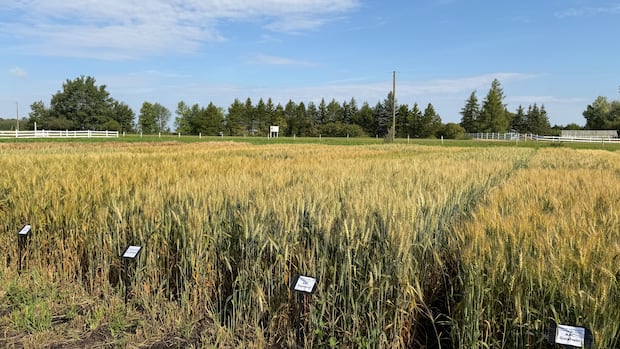

In northeastern Alberta, researchers are tackling copper deficiencies in cattle, which can impact their fertility and overall well-being, by applying the mineral to wheat crops. Additionally, they are experimenting with various cover crops to determine which ones effectively control weeds, leading to reduced herbicide usage.
Jay Cory, a farmer and chair of the Lakeland Agricultural Research Association (LARA), highlighted how research sparks new ideas and insights for farmers to consider. LARA, a non-profit organization serving northeastern Alberta, conducts trials at its Fort Kent research field to enhance agricultural practices and sustainability.
Area producers recently attended a tour of the facility to explore the 10 ongoing trials focusing on crop varieties and practices aimed at boosting productivity. Maria Angelica Ouellette, a research scientist at LARA, emphasized the importance of testing concepts under real-world conditions, considering factors like precipitation and temperature fluctuations.
The research conducted at LARA is shaped by inquiries from local farmers, aiming to help them achieve sustainable and productive land use. This year’s trials are observing the impact of unusually wet weather on crops, providing valuable insights for farmers facing unexpected growing conditions.
Alyssa Krawchuk, LARA’s executive director, stressed the significance of tailoring research to local conditions to address the diverse climatic challenges across the province. The organization’s mission is to conduct impartial research and share findings with producers through events like field tours.
Jay Cory emphasized the need to balance innovation with cost efficiency, ensuring that solutions are economically viable for farmers. By testing new approaches at the research field, LARA helps mitigate risks for farmers like Neil, offering a platform to experiment with new products and techniques without risking potential setbacks on their own farms.