
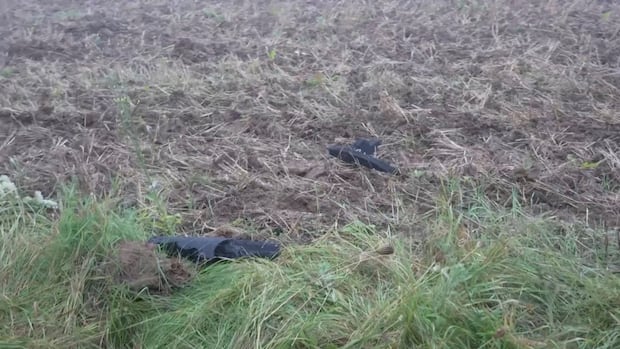

In the early hours of Tuesday, an Italian NATO fighter jet downed a drone over Lithuania, as reported by the Lithuanian National Crisis Management Centre.
The drone, which entered Lithuanian airspace from Belarus, a Russian ally, was intercepted and destroyed near the southern village of Pratkunai, not far from Kaunas, according to the Lithuanian authorities.
“Once again, the Italian pilots have acted decisively and neutralized a threat that likely originated from Russia,” stated Italian Defence Minister Guido Crosetto during a briefing at Siauliai Air Base, where Italian aircraft are stationed as part of NATO’s Baltic Air Defence initiative.
The presence of military drones in the airspace of neighboring countries has raised alarms regarding the potential spillover of Russia’s conflict in Ukraine into NATO territories.
Lithuanian Defence Minister Robertas Kaunas expressed gratitude to Italy and indicated that once the debris from the drone is analyzed, “we will be able to determine definitively if it is a Russian drone, possibly a provocation, or if it belongs to another nation.”
In recent months, drones from Ukraine have also entered NATO airspace in the Baltic area, with Kyiv claiming that they were diverted by Russian signal jamming.
A drone alert was previously issued in Vilnius, the capital, and the surrounding areas.
The Lithuanian military released footage from the crash site, depicting debris scattered across the grass, with some components appearing wooden and others charred.

Concerns are escalating that Moscow might trigger a direct conflict with NATO, amid repeated drone incursions on member states during the ongoing war between Russia and Ukraine.
Since the Baltic nations joined NATO in 2004, jets involved in the Baltic Air Defence mission have been monitoring the skies over Latvia, Lithuania, and Estonia. This mission has previously intercepted stray Ukrainian drones over Estonia in May, and over Latvia in June and August.
On Monday, NATO Secretary General Mark Rutte indicated that strikes occurring near alliance territory would compel the transatlantic organization to enhance its support for Kyiv. Rutte also affirmed the commitment to strengthen the defenses of the 32-nation alliance along its extensive eastern border with Russia.
Denmark reports encounter with Russian ship
In a separate incident, Denmark reported that a Russian frigate launched two flares at a Danish military helicopter on Monday. Foreign Minister Lars Lokke Rasmussen condemned the act as “unacceptable,” emphasizing that it posed a risk to human lives.
Prime Minister Mette Frederiksen characterized the incident as serious but not unexpected, noting it reflects a trend of increasing aggressiveness from Russia as it escalates hybrid warfare against Europe and tests NATO’s resilience.
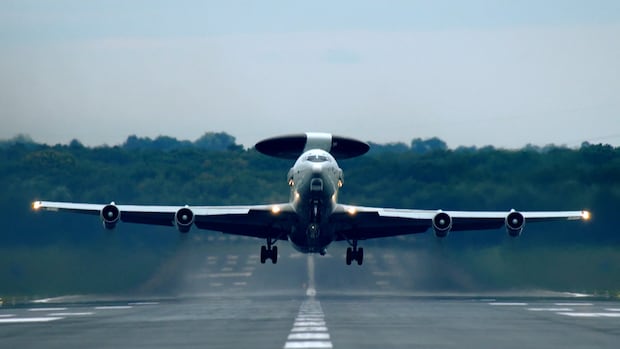
NATO is on the lookout for airspace threats over eastern Europe as suspicious drone sightings continue to shut down airports. For The National, CBC’s Briar Stewart gets a closer look at the Operation Eastern Sentry mission and what it’s watching for in the skies
The Baltic Sea region remains on high alert following incidents involving pipeline outages, airspace violations, and drone sightings.
Russia has rejected allegations regarding these events and consistently denied conducting hybrid warfare in Europe.
Russia accused Danish military helicopters of executing perilous maneuvers near its naval vessels in the Baltic Sea, and lodged an official complaint with Copenhagen about these occurrences, according to Russia’s ambassador to Denmark as reported by RIA state news agency.
Ambassador Vladimir Barbin was cited by RIA as placing the blame on Denmark for the situation.
Ukraine reports deaths
Meanwhile, on Tuesday, Russian forces targeted petrol stations in Kyiv while Ukraine struck a Russian oil refinery, as both sides continued to target each other’s energy infrastructures despite an announcement the previous day by U.S. President Donald Trump stating they had agreed to cease attacks.
Russia launched 200 drones against Ukraine’s capital and other urban centers in overnight assaults, resulting in two fatalities. Alongside the petrol stations in Kyiv, energy and port facilities in various regions were also targeted, according to Ukrainian officials.
-
EU slams Russian attack at Ukraine train station where world dignitaries had gathered
-
Analysis
Zelenskyy’s comparison of Canada to Ukraine is imperfect — but it matters
In retaliation, Ukraine targeted a Russian oil refinery in Syzran, located in Russia’s Samara region along the Volga River, as well as drone production facilities in the Taganrog and Oryol regions, according to President Volodymyr Zelenskyy.
Trump had called on Zelenskyy to refrain from attacking Russian diesel infrastructure, claiming such actions were leading to a fuel shortage affecting the global market.
Trump did not elaborate on the specifics of the supposed agreement reached between the parties.
Zelenskyy expressed on Monday night that Kyiv was “prepared to support de-escalation,” although he voiced skepticism about Russia’s willingness to comply with such a request.
On Tuesday, the Kremlin stated that it welcomed what it referred to as a U.S. proposition, while insisting that “illegal” sanctions on Russian energy supplies should be revoked.
Kremlin spokesperson Dmitry Peskov told the press that Trump’s suggestion was a “very good idea,” but emphasized that more than that would be required to lower global fuel prices. He indicated that Russia would maintain communication with the U.S. regarding Trump’s proposal.
In further escalations on Tuesday, Odesa’s regional governor, Oleh Kiper, reported that Russian forces struck port infrastructure in Ukraine’s southern Black Sea region overnight, targeting residential buildings, logistical facilities, and transport infrastructure.
According to the Russian Defence Ministry, Russian forces attacked a cargo ship and a ferry transporting military supplies in Ukraine’s Chornomorsk port on Tuesday.