
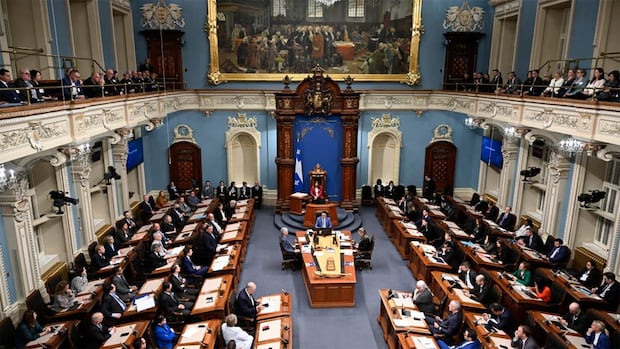

A legal expert is challenging a 2022 Quebec law that eliminated the compulsory Oath of Allegiance to the King for members of the province’s National Assembly, contending that the provincial government exceeded its constitutional authority. The petition was lodged in Quebec Superior Court in Montreal on Monday by the Public Interest Litigation Institute and its founder, Lawrence David, a law professor at the University of Ottawa. The lawsuit names the Attorney General of Quebec as the defendant and the Attorney General of Canada as an interested party. The legal action targets Quebec’s Bill 4, which was unanimously passed in December 2022. The legislation amended the Constitution Act of 1867 to specify that Quebec legislators are no longer required to pledge allegiance to the monarch.
The bill was introduced by the Coalition Avenir Québec (CAQ) government following pressure from the separatist Parti Québécois (PQ). Several PQ members had refused to take the oath to King Charles III and were consequently prevented from assuming their seats in the assembly. The lawsuit asserts that Quebec needed the unanimous consent of the House of Commons, the Senate, and all provincial legislatures in the country to abolish the mandatory oath. It further alleges that the law contravenes Section 3 of the Canadian Charter of Rights and Freedoms, which guarantees the right to effective representation, as individuals who do not take the oath are deemed ineligible to serve as MNAs.
The legal challenge raises concerns that any laws enacted by an assembly comprising members who have not sworn allegiance might be invalidated. In an interview with CBC, David explained his motivation for filing the lawsuit, citing personal and professional reasons. Quebec has pledged to defend the law, with Quebec Justice Minister Simon Jolin-Barrette’s office affirming its intention to uphold the province’s prerogative to modify its own regulations. The Minister’s spokesperson emphasized that the change aligns with the sentiments of the majority of Quebecers who oppose the monarchy. The Minister of Justice and Attorney General of Canada’s office declined to comment on ongoing legal matters. Recently, the Supreme Court of Canada announced its decision to review a case concerning the constitutionality of mandating aspiring lawyers to swear allegiance to the reigning monarch. Alberta’s highest court ruled in December that such a requirement infringes on the Constitution and religious freedoms.