


A new phase of American tariffs on goods from Canada commenced just after midnight on Tuesday, imposing 50 percent duties on 110 items, which include various cheeses, motorboats, all-terrain vehicles (ATVs), and furniture.
These updated tariffs are part of a series of adjustments announced by the Trump administration last week. Newly included categories in the tariff list consist of aluminum products, paper and wood items, iron or steel beams, electric lamps, and mattresses.
The White House stated that it would concurrently lift tariffs on 10 products, such as salt, sugar, cement, switchboards, and toilet paper, to “mitigate the impact on U.S. commerce while better addressing the public interest.”
In 2024, Canada exported around $328 million USD worth of toilet paper to the United States, making it the top international supplier of this product.
Canada is also a major supplier of salt to the U.S., with imports valued at approximately $159.2 million USD from Canada in 2025, as per trade data from UN Comtrade and the World Bank.

U.S. President Donald Trump has reduced tariffs on certain Canadian products, including toilet paper, cement, and salt. In 2024, Canada was the largest international supplier of toilet paper to the U.S., exporting around $328 million of the product.
According to experts, the removals and additions of tariffs are nearly equivalent in economic value, effectively neutralizing each other.
“In monetary terms, they are essentially the same,” Wolfgang Alschner, who holds the Hyman Soloway chair in business and trade law at the University of Ottawa, informed CBC News.
The categories that had tariffs lifted account for about $2.41 billion, while the newly imposed tariffs encompass approximately $2.56 billion of trade in 2025, based on Alschner’s analysis. This represents only a minor increase in tariff coverage, impacting a small portion of trade between the two nations.
The highest dollar value is found in the category of switchgear assemblies and switchboards — the U.S. imported about $750 million USD of these products from Canada in 2025, which serve various applications, including cars and airplanes, Alschner noted.
‘You need to salt your roads’
The choice to eliminate some tariffs indicates that the U.S. is mindful of the costs that are passed onto American consumers and is prepared to adjust to alleviate their economic distress, Alschner mentioned.
“Salt is essential for treating roads in winter. Therefore, this is not easily replaceable,” he stated. “The same goes for cement.”
-
What will Trump’s retaliatory tariffs do to Canada’s economy big picture? Not that much, economists predict
-
Analysis
Trade ‘war’ or not, are Canada and the United States now dug in?
The new tariffs come in the wake of the failure to reach a trade agreement between the U.S. and Canada in August, escalating an ongoing trade conflict.
On August 22, the U.S. implemented its threat of imposing 50 percent tariffs on a broad range of Canadian goods. Canada responded with its own tariffs affecting nearly 700 categories of U.S. products, which took effect on September 8.

U.S. President Donald Trump has intensified trade measures against Canada, further escalating the trade war. CBC’s Peter Armstrong highlights that the increasing scope of the trade conflict may result in regional disruptions, potentially leading to job losses and the closure of small businesses.
In addition to the new tariffs imposed on September 15, U.S. President Donald Trump unveiled an upcoming import ban on Canadian alcohol, motorcycles, and several other products, set to take effect on September 29.
Experts suggest that the expanding nature of the trade conflict could lead to regional disruptions, potentially resulting in job losses and the shuttering of small enterprises.
Alschner noted that the recent tariffs will restrict some Canadian businesses from adapting. For example, an aluminum manufacturer might have previously shifted production towards aluminum types that were not subject to tariffs.
However, with the introduction of more specific tariffs, “some of these loopholes have been closed.”
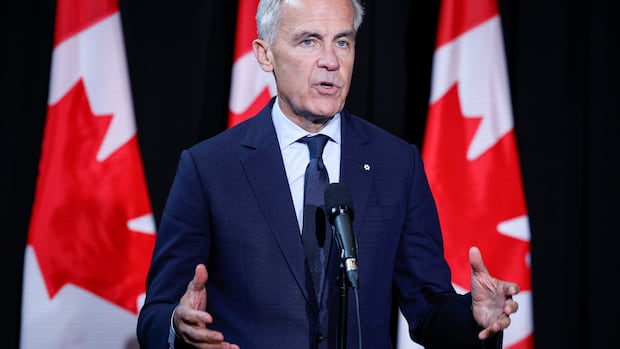
Prime Minister Mark Carney stated on Thursday that the government is examining U.S. President Donald Trump’s recent policies, which include bans on Canadian imports such as most alcohol products and new 50 percent tariffs on various other items. ‘We fully recognize that for individual companies and in individual sectors these are significant, and there’s a response there,’ Carney said.
Economist Andrew Dicapua mentioned to CBC News that the subdued reaction from the U.S. regarding Canada’s counter-tariffs, combined with the delayed timeline for the import bans, might indicate that negotiations are approaching a resolution.
Trump recently remarked that a trade agreement with Canada could be finalized “fairly soon,” during a meeting with Irish Prime Minister Micheál Martin in Dublin over the weekend, Dicapua observed.
-
Carney warns of tough times ahead in video message as retaliatory tariffs kick in
-
What tariffs are still in place? Tracking the Canada-U.S. trade war
“The timing of these bans, being announced after the tariffs, should suggest that the U.S. is allowing for negotiations,” Dicapua stated.
“Ultimately, we need to reach an agreement with the United States as soon as possible. This back-and-forth approach, although well-intended, is not a viable long-term strategy.”
Tag: rewrite-pending