

The NHS has cautioned individuals in the UK who depend on glasses or contact lenses about the potential risks associated with two common eye conditions. Astigmatism, according to health officials, often leads to vision blurriness. This issue is typically addressed with glasses or contact lenses, making wearers more susceptible to developing the condition. Additionally, there is a possibility that individuals with astigmatism may also have another closely related eye problem.
To enhance awareness about this, the NHS clarified that having astigmatism means the eye is shaped more like a rugby ball than a football. Common symptoms of astigmatism include blurred vision, headaches, and eye strain, especially noticeable after extended periods of focus, such as when using a computer.
The NHS elaborated that the rugby-ball shape of the eye causes light to focus at multiple points within the eye. Although not all cases require treatment, healthcare professionals have identified various approaches that can assist, including wearing glasses, using contact lenses, and potentially undergoing laser surgery.
Nevertheless, these options may not be suitable for everyone and each has its own advantages and disadvantages. Astigmatism often coexists with nearsightedness or farsightedness and, when affecting only one eye, can sometimes lead to a lazy eye due to improper vision development.
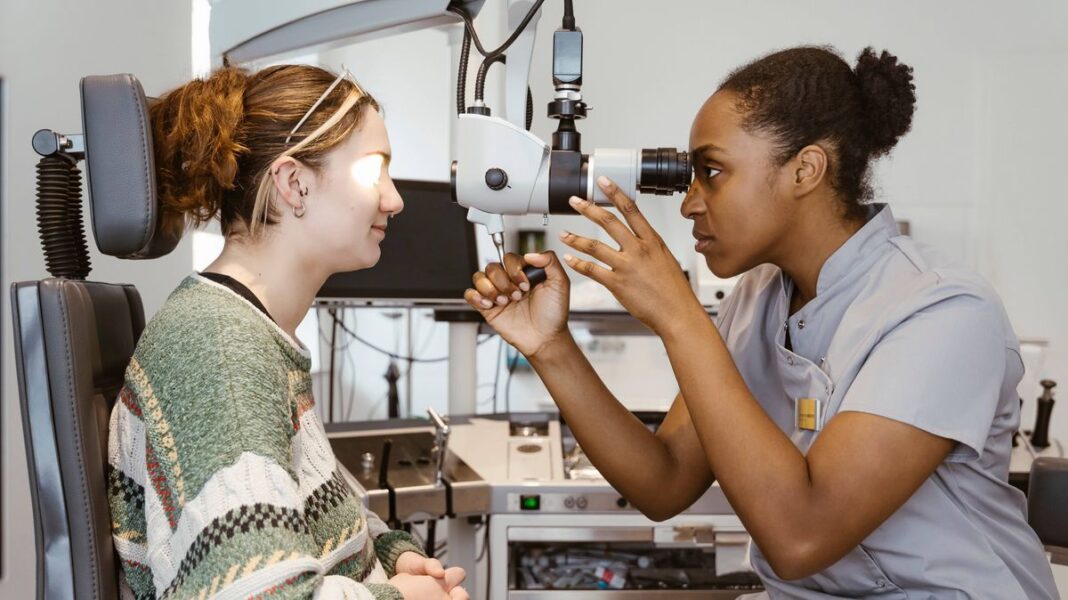
The NHS recommends scheduling an appointment with an optician if experiencing symptoms of astigmatism or if it has been more than two years since the last eye check-up. It warns that astigmatism could be linked to a condition called keratoconus, underscoring the importance of regular eye examinations.
According to Specsavers UK, keratoconus occurs when the cornea weakens and thins at its center, causing it to become irregular and impacting vision focus. In its early stages, glasses or contact lenses may be suggested, but if the condition worsens, referral to a corneal specialist for advanced treatment options based on severity may be necessary.
You are entitled to a free NHS sight test if you meet certain criteria, including being under the age of 20 and dependent on someone receiving specific benefits. Those listed on an NHS certificate for partial health cost assistance may also receive aid for a private sight test.
For more information on eligibility for free NHS eye tests and optical vouchers, visit the provided link.