
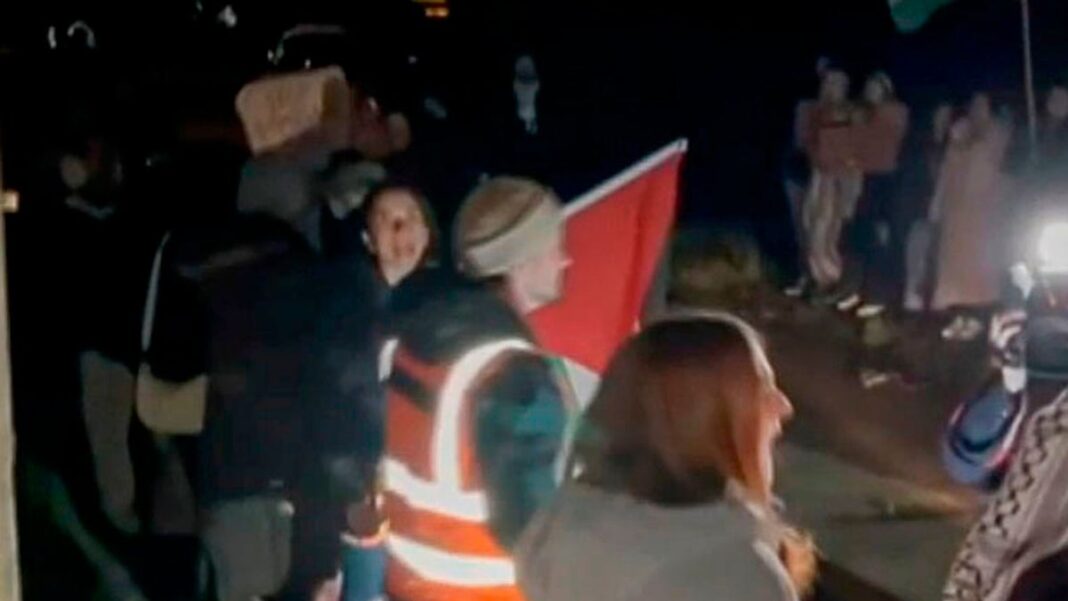

Protests outside the residences of public officials are set to be prohibited under a new law, carrying a penalty of up to six months in prison for offenders. The legislation aims to enhance protections against harassment and intimidation for Members of Parliament (MPs), peers, and councillors. An alarming survey revealed that 96% of MPs have encountered incidents impacting their ability to fulfill their roles.
The upcoming law will criminalize demonstrations outside the homes of individuals in public office aimed at exerting influence over them. Security Minister Dan Jarvis emphasized that such actions “cross a line” and deter people from engaging in electoral processes. Jarvis highlighted the concerning levels of abuse faced by those involved in British politics, stating that it poses a significant threat to democracy and hampers individuals’ willingness to participate.
The measure, included in the Crime and Policing Bill, excludes official residences like Downing Street and Chequers. It is designed to combat toxic behaviors within the realm of British politics. Reports from the Electoral Commission indicated that more than half of candidates in the previous general election experienced various forms of abuse or intimidation.
A survey conducted by Commons Speaker Sir Lindsay Hoyle found that 96% of all MPs had encountered at least one incident negatively impacting their job performance. Will Fletcher, interim head of the Jo Cox Foundation established in memory of the late Labour MP, emphasized the safety concerns and distress caused by protesting outside someone’s home.
Samantha Dixon, Minister for Democracy, expressed determination to combat any form of intimidation or abuse towards public officials to foster wider participation in democratic processes. Several high-profile politicians, including Keir Starmer, have faced demonstrations at their family homes. The trend has raised concerns among MPs like Tobias Ellwood, who condemned the targeting of private residences for aggressive protests, highlighting the detrimental impact on families and neighbors.
The normalization of such behavior is deemed unacceptable, signaling a concerning state of democracy.