
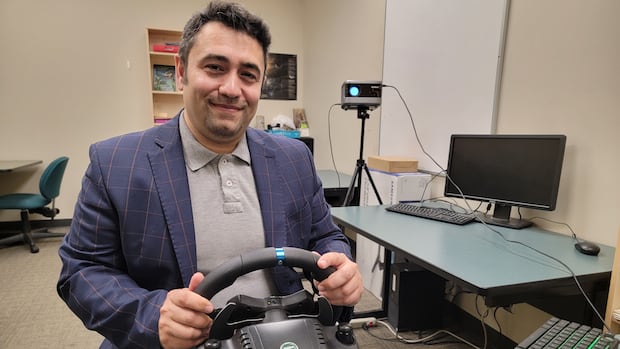

A researcher from the University of Northern British Columbia is investigating driving behavior to enhance future wildfire evacuation processes.
PhD candidate Alireza Noory at UNBC has created a driving simulator designed to assist emergency planners in northern regions in understanding how drivers react during wildfire evacuations.
When wildfires pose a threat to communities, the choices made by drivers can significantly affect the speed at which people can reach safety.
The simulation will involve participants driving on Highway 97, located north of Prince George, first under normal conditions and subsequently in a wildfire evacuation context.
Metrics such as reaction time, speed, acceleration, braking, lane positioning, and other variables will be analyzed in both scenarios.
“Data gathered from local drivers will enable evacuation predictions to be more accurate and assist local authorities in developing safer, more effective evacuation plans,” Noory stated.
“This is crucial, as many existing evacuation models depend on generalized assumptions or data from different communities.”
The information collected will be utilized to refine a separate computerized traffic model for Prince George, potentially aiding city officials in anticipating traffic flow during an evacuation.
This calibrated model will evaluate evacuation travel times, congestion, road closures, and alternative traffic management tactics before an evacuation occurs.
“The findings will reveal how local drivers modify their behavior when faced with reduced visibility, urgency, emergency notifications, and hazards related to wildfires,” Noory explained.
“Some individuals consciously choose to lower their speeds, which we found to be quite interesting,” he remarked regarding his observations thus far.
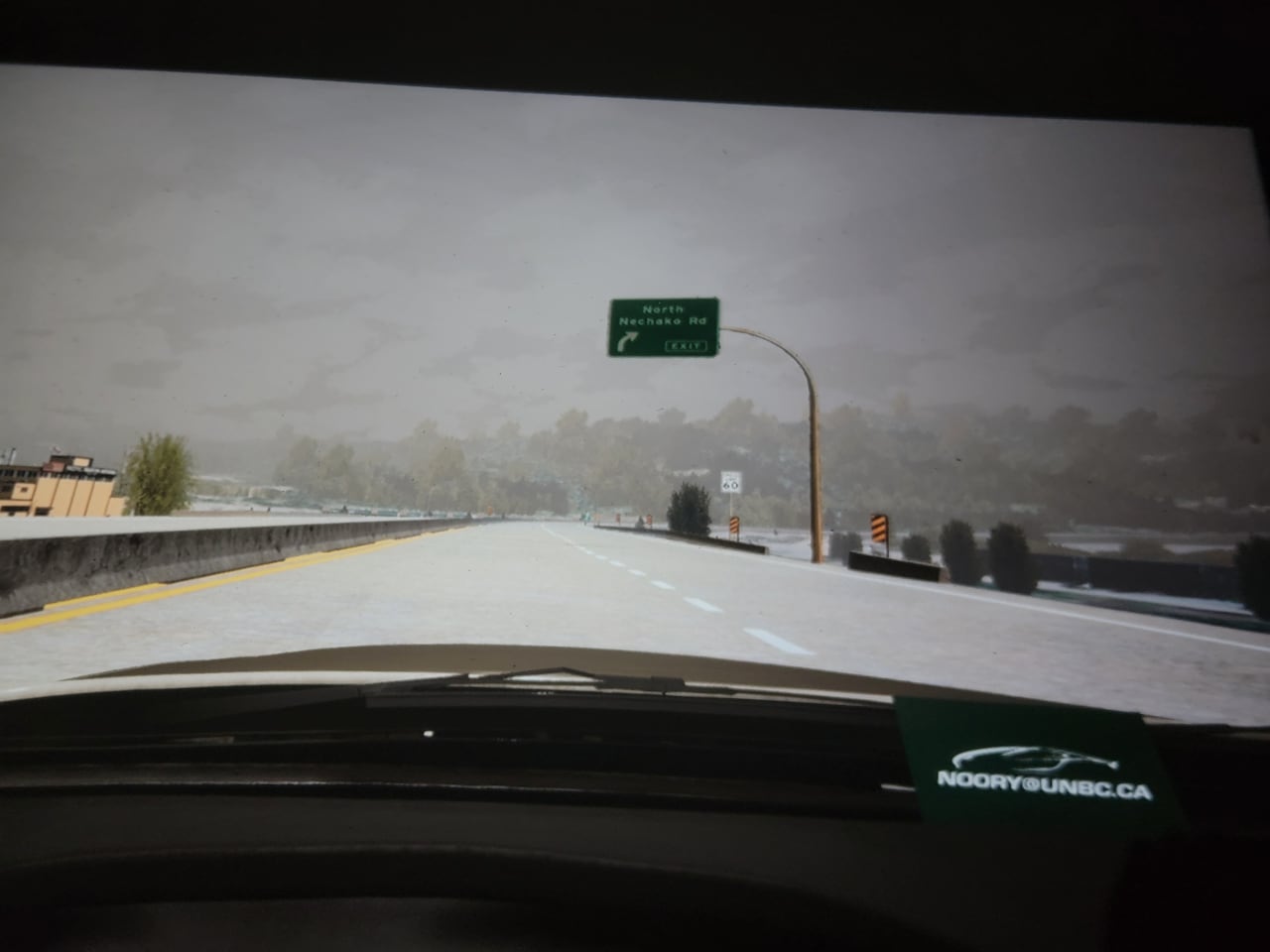
During the simulation, participants will navigate a recreated segment of Highway 97 north of Prince George, and their reactions will be monitored in a high-stress environment. (Jason Peters/CBC)
Another tool in the toolbox
As outlined in the province’s evacuation process for local and Indigenous governments, the majority of evacuations take place along roads and highways using personal and public transport.
Regions with few exit routes must also consider alternative means of evacuation, such as air, rail, and marine transport.
Communities are advised to prepare for the number and geographic spread of evacuees, the capacity of transportation infrastructure, and the likelihood of congestion or bottlenecks.
They must also account for areas susceptible to damage, fuel supply availability, and contingency plans for vehicle breakdowns, alongside coordinating routes with the necessary authorities.
Williams Lake Mayor Surinderpal Rathor emphasized that having more resources available to communities is beneficial for managing emergency situations.
“Our community experienced a full-scale evacuation in 2017. It was chaotic… a major source of frustration,” he noted.
“People were frightened. They were uncertain about what to take with them and what to leave behind.”
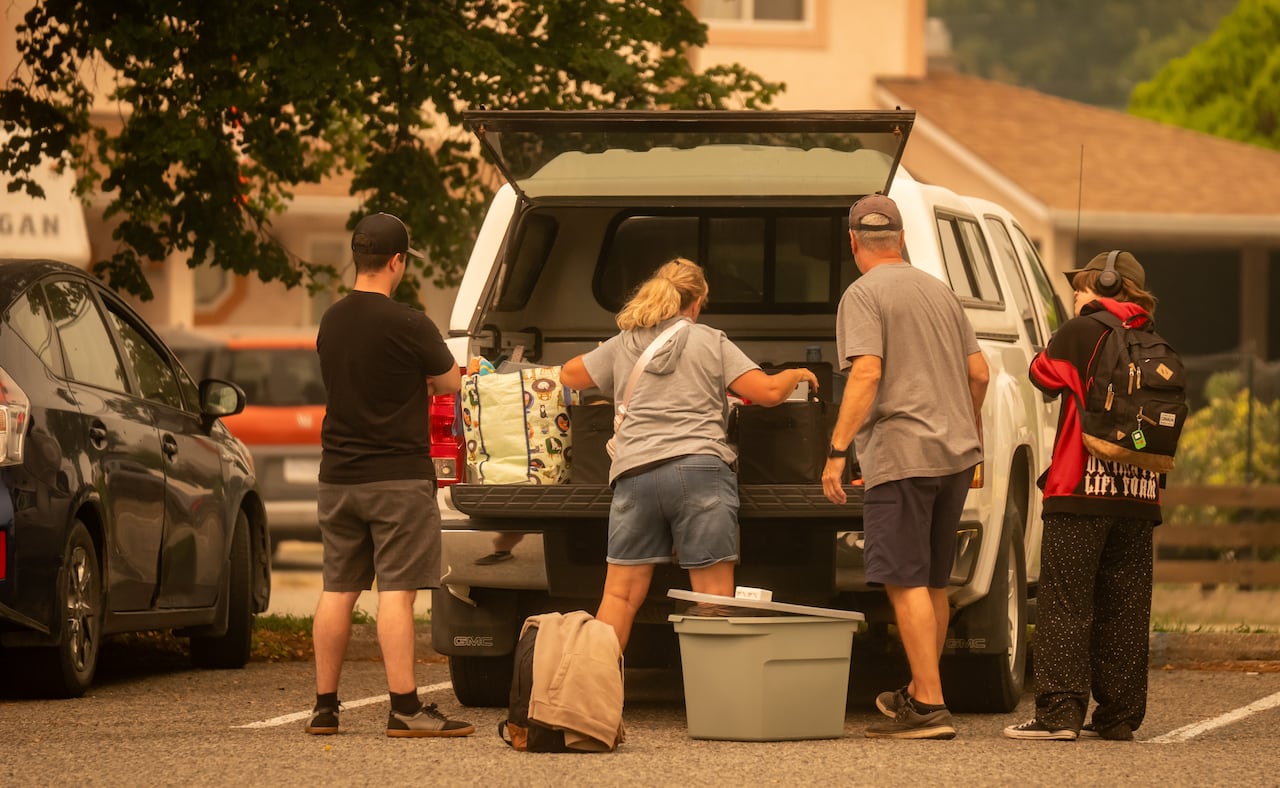
Evacuees from the Bald Range fire are seen at the evacuation center in Penticton, B.C., on August 8. Mayor Surinderpal Rathor of Williams Lake noted that evacuees often struggle with decisions about what to bring or leave behind. (Ben Nelms/CBC)
Rathor also mentioned the presence of many newcomers in the community, suggesting that the study’s results could assist these individuals in understanding evacuation procedures.
“Compared to typical driving conditions, there is a 100 percent increase in traffic on the highway, leading to heightened stress levels,” he elaborated.
“You encounter far more challenges, obstacles, and panic because you are unaccustomed to such heavy traffic. Therefore, gaining knowledge from this will always be beneficial.”
Researchers are seeking adult drivers of various ages and experience levels to take part in the study.