
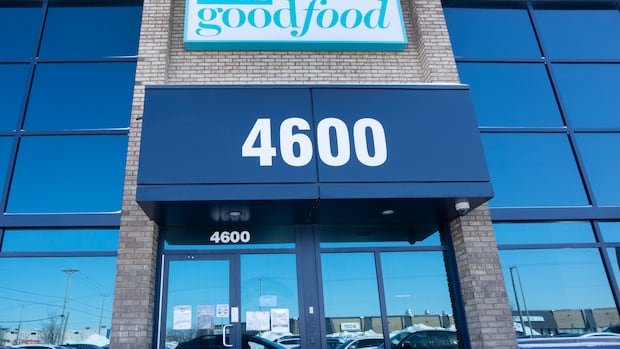

A court in Quebec has approved Goodfood Market Corp.’s request for creditor protection as the company seeks to restructure under new ownership or with support from investors.
The Montreal-based meal kit company revealed its move to shield itself from creditors by filing an application with the Superior Court of Quebec. The court granted an initial order, providing a customary 30-day protection period during which creditors are prohibited from initiating new legal actions to collect outstanding debts.
Typically, this protection period can be extended at subsequent hearings as companies progress with their restructuring efforts. Goodfood aims to utilize this creditor protection to reorganize its operations effectively.
The company plans to seek court approval to engage potential buyers or investors for its business and assets. Court documents indicate that Goodfood faced financial challenges, leading to the decision to seek reprieve and explore a potential sale due to substantial debts owed to creditors.
While recognized for its meal kit services, Goodfood had ventured into an on-demand grocery division in November 2021 with plans to offer quick deliveries. However, by October 2023, this initiative was discontinued as it failed to achieve profitability.
Despite discontinuing the grocery operations, Goodfood retained its workforce of 233 employees. The company assures that there are no expected job losses related to the court proceedings but hints at potential targeted layoffs.
Throughout the court process, customers can continue to place orders that Goodfood will fulfill. The company was founded in 2014 by Jonathan Ferrari and Neil Cuggy. Ferrari resigned as CEO on August 25, 2025, while Cuggy, who was the president and COO, departed by January 16, 2026, according to court records.
Recently, CEO Selim A. Bassoul stepped down and was succeeded by Najib Maalouf, who assumed the roles of COO and president.
Goodfood’s move to seek creditor protection comes as part of its strategic efforts to navigate financial challenges and explore potential restructuring opportunities.