
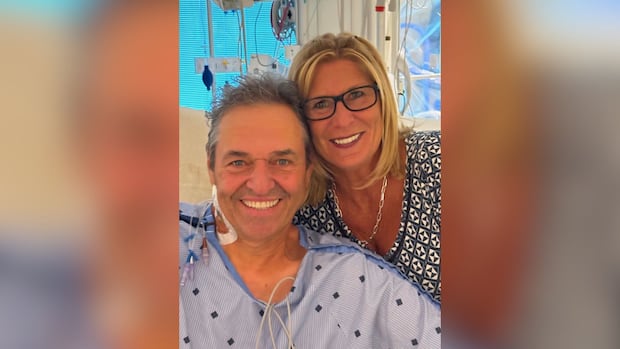

A 64-year-old man from Quebec has made history as the first recipient of a regenerated liver in North America, thanks to a groundbreaking technology that could potentially increase the availability of transplantable livers by dozens in its inaugural year alone. Gérard Landry, hailing from Nouvelle on Quebec’s Gaspé Peninsula, battled liver issues for approximately 15 years, culminating in cirrhosis and liver cancer. Prior to undergoing liver transplant surgery, Landry was informed by his physician that the organ he was receiving had been regenerated using a novel machine introduced at Montreal’s Centre hospitalier de l’Université de Montréal (CHUM).
Referred to as Liver Assist, the innovative technology enables medical professionals to treat and evaluate a donated liver outside the human body before transplantation. For Landry, this meant receiving an organ that would have previously been deemed too risky for use. Dr. David Hénault, a hepatopancreatobiliary surgeon and liver transplant specialist at CHUM, spearheaded the project and conducted Landry’s surgery. The Liver Assist system functions by linking a donated liver to a device that circulates an oxygen-rich fluid through the organ, potentially reversing some of the damage caused by oxygen deprivation while the organ is extracorporeal.
Subsequently, doctors can switch to a blood-based solution to assess how the liver performs in conditions simulating the human body. This method allows for the identification of livers that can be salvaged for transplantation using the new technology. The CHUM conducts around 70 liver transplants annually, and a partnership with Transplant Québec identified livers previously declined for transplantation that could potentially be restored with the aid of the new technology. Estimates suggest that around 20 to 24 additional livers could become available for transplantation in the first year of implementing the machine, with potential for further growth as the technology becomes more widespread.
In addition to expanding the pool of transplantable livers, studies have indicated that the technology may reduce complications, reoperation rates, and hospital stays for suitable patients. Landry’s swift post-transplant recovery showcased promising results, with improved blood work just a day after the procedure. As he continues to recuperate in Montreal, undergoing regular blood tests for medication adjustments, Landry anticipates returning to Gaspésie to resume his recovery. Expressing eagerness to reunite with his family, grandson, friends, and horses, Landry hopes his journey will inspire discussions about organ donation. He emphasizes the importance of organ availability, highlighting that even the most advanced technology is futile without donated organs, likening it to having a horse without a rider—a situation lacking its essential purpose.