
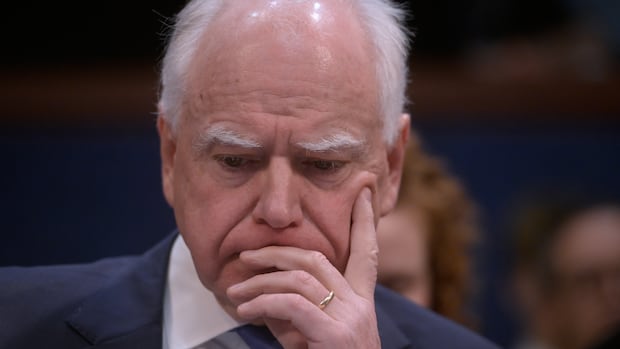

Minnesota Governor Tim Walz announced on Tuesday that the state will not be processing permits for proposed mining projects in the Boundary Waters Canoe Area Wilderness. This decision comes four months after the federal ban on mining in the area was lifted by the U.S. Congress and President Donald Trump’s administration.
The Boundary Waters Canoe Area Wilderness spans approximately 240 kilometers along the Minnesota-Canada border within the Superior National Forest, situated just south of Ontario’s Quetico Provincial Park. This pristine wilderness attracts thousands of outdoor enthusiasts each year, including canoeists, kayakers, and campers.
Governor Walz, a Democrat, emphasized the importance of preserving this sacred place in its natural state, stating, “It’s our responsibility as Minnesotans to protect the wilderness and keep it untouched.”
Although Governor Walz’s executive order is temporary and set to expire in April, the next governor could potentially extend it. While there are no immediate mining projects underway, Twin Metals Minnesota LLC, a subsidiary of Chile-based Antofagasta Minerals, has been exploring copper, nickel, and other mineral deposits in the national forest since 2019. The company asserts that its mining operations would be conducted without above-ground waste rock storage to prevent environmental harm, including acid runoff.
Environmental concerns have been raised regarding potential pollution from mining activities near the canoe area, which is downstream from the proposed mine site. In a move to protect the region, Governor Walz’s order prohibits Minnesota regulators from participating in federal environmental reviews of nonferrous mining in the Rainy River watershed, which is connected to the Boundary Waters.
Furthermore, the state will not engage in environmental assessments or permitting processes for mining proposals while legal disputes over state mining regulations persist. Governor Walz has also called for legislation to ban nonferrous mining in the Rainy River watershed to safeguard the environment.
Reacting to the governor’s decision, U.S. Representative Pete Stauber, a Republican, criticized Walz for what he termed an assault on northern Minnesota’s livelihood and heritage. Stauber expressed dismay over the potential economic repercussions of halting mining projects in the region.
Becky Rom, chairperson of the advocacy group Save the Boundary Waters, commended Governor Walz for his stance, asserting that copper mining and the Boundary Waters cannot coexist without endangering the environment. Rom highlighted the importance of protecting the clean water, pristine wilderness, and outdoor industry that are integral to Minnesota’s heritage.
James Coleman, a professor at the University of Minnesota Law School, noted that Governor Walz’s order introduces uncertainties for future mining projects, as securing both state and federal approvals can be a lengthy and politically sensitive process. Coleman emphasized that changing political landscapes at the state and federal levels could impact the fate of mining ventures in the long run.