
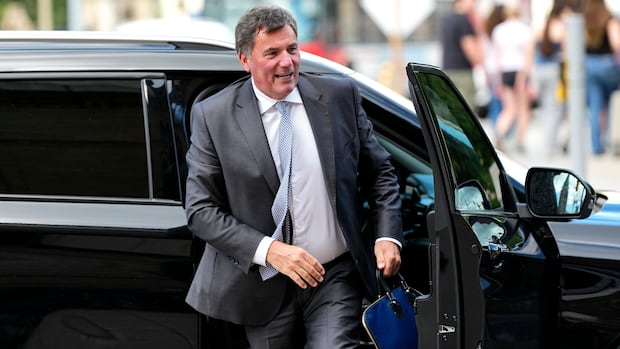

Canada’s Trade Minister, Dominic LeBlanc, engaged in an extensive meeting with U.S. officials in Washington in an effort to finalize a deal aimed at providing relief from tariffs for Canadian industries and restoring U.S. alcohol sales in Canadian province-operated liquor stores. LeBlanc, who has been shuttling between Ottawa and Washington to iron out the details of a potential significant bilateral agreement, remained guarded about the specifics of the discussions with U.S. President Donald Trump’s top trade representative, Jamieson Greer. Nonetheless, he expressed optimism about the progress made during the nearly three-hour meeting, which surpassed the initially anticipated duration of 30 minutes.
Although specific details of the agreement have not been publicly disclosed, a source familiar with the negotiations revealed that U.S. tariffs on Canadian steel and aluminum are set to decrease from 50% to 25%. Talks regarding derivatives and exemptions are ongoing, with the lower steel tariff expected to be coupled with a quota system limiting the volume of imports into the U.S. at the reduced rate.
Furthermore, the deal is projected to reduce the headline tariff rate on Canadian-manufactured cars and trucks from 25% to 15%. If this tariff applies solely to the non-U.S. portion of a vehicle, the effective rate could potentially be halved to 7.5%. In exchange for these tariff reductions, the U.S. is seeking the cessation of the U.S. alcohol boycott in most provincially owned liquor stores and the removal of provincial restrictions hindering American companies from competing for government contracts in Canada.
While some premiers commended the efforts to negotiate the tariff reductions, Manitoba Premier Wab Kinew expressed skepticism about dealing with Trump and advocated for a more aggressive stance. Despite his reservations, Kinew indicated willingness to comply with the request to restore U.S. liquor sales, emphasizing the complexities of the situation faced by negotiators like Mark Carney.
Nova Scotia Premier Tim Houston, content with Carney’s proposals, refuted claims that Carney was pleading with the premiers, underscoring the commitment to securing the best deal for the country. Other provincial leaders, including Ontario Premier Doug Ford and Quebec Premier Christine Fréchette, engaged in discussions with Carney to address concerns and assess the potential impacts on their respective provinces.
British Columbia Premier David Eby expressed support for the ongoing negotiations, acknowledging that while the deal may not fulfill all expectations, progress has been made across vital economic sectors. Eby echoed Carney’s commitment to bolstering the Canadian economy and diversifying trade partnerships, emphasizing the need to continue efforts in building a resilient economy benefiting all Canadians.