
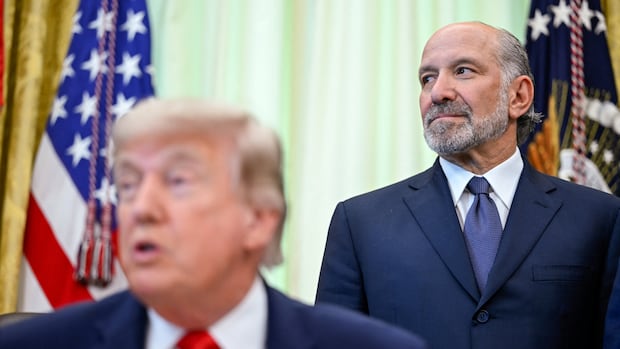

U.S. Commerce Secretary Howard Lutnick, a key member of President Donald Trump’s cabinet, has reportedly voiced discontent with the current trade deal negotiations with Canada. Sources familiar with the private discussions revealed that Lutnick, a significant figure in the Trump administration’s economic policies, believes that the United States could secure a more favorable agreement than the one currently under consideration.
Particularly, Lutnick raised concerns about the potential reduction of sectoral tariffs, specifically proposing a decrease in the tariff on Canadian-made automobiles from 25% to 15%. He argued that lowering these tariffs could hinder efforts to promote domestic production within the U.S.
While the sources, who were briefed on the talks as of Thursday night, emphasized that Lutnick’s involvement did not jeopardize the deal, his discontent contrasts with the positive outlook presented by President Trump, Prime Minister Mark Carney, and top trade negotiators from both countries in recent public statements.
In response to inquiries, the U.S. Department of Commerce did not deny Lutnick’s dissatisfaction with the terms of the deal. A statement clarified that Secretary Lutnick has been actively engaged in negotiations with his Canadian counterparts alongside U.S. Trade Representative Jamieson Greer.
The ongoing discussions aim to finalize a trade agreement before the looming deadline of Trump’s suspension on new tariffs against various Canadian goods. The terms of the deal, which are not yet public, reportedly include reductions in sectoral tariffs affecting Canadian aluminum, steel, and automobile industries. In exchange, Canadian premiers have been requested to consider lifting provincial bans on American alcohol.
As the negotiations intensify and the deadline approaches, both countries are working towards reaching a mutually beneficial agreement. The involvement of key figures like Lutnick and Greer underscores the significance of trade and tariff policies in shaping the economic landscape between the U.S. and Canada.